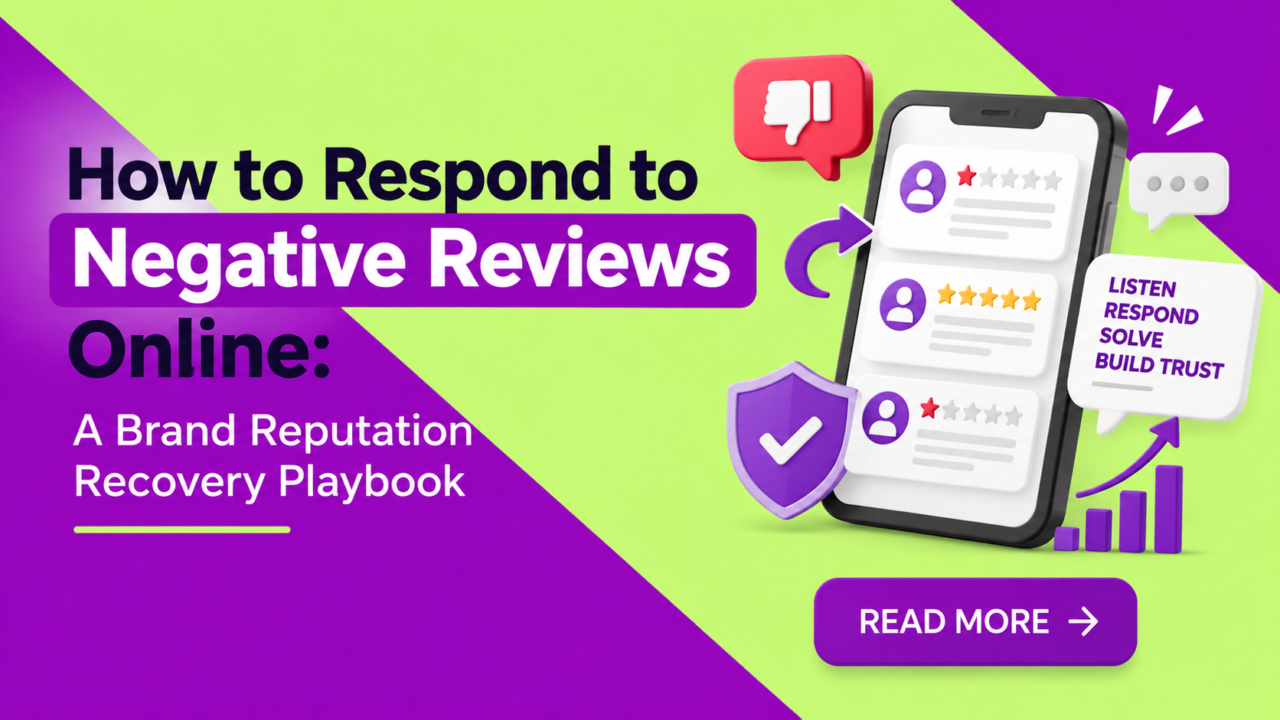
If you are googling how to respond to negative reviews, chances are something has already blown up on Google, Instagram, or Zomato and you are trying not to make it worse. You are not looking for theory; you want exact words, timing, and a plan that protects both your brand and your sanity.The good news is that most angry reviews can be turned into neutral or even positive moments if you reply well and fix the root issue. The bad news is that one careless response can live in screenshots forever. This playbook will keep you on the right side of that line.
Why Negative Reviews Hurt More Than You Think
One scathing review feels unfair, but there is a reason it hits your business harder than a happy one helps. People scroll straight to the worst comments because they are trying to reduce risk, especially in India where word-of-mouth still carries more weight than any ad.On platforms like Google, Swiggy, and MakeMyTrip, a cluster of bad comments can drag down not just your rating but also your visibility. That is where solid negative review management comes in, because the algorithm cares about freshness and responses, not just stars.The other cost is internal. Teams start taking things personally, reply in anger, or ignore problems because they feel attacked. Your process for handling feedback has to protect staff as much as it protects the brand.
The First 60 Minutes: Immediate Damage Control
The first hour after a bad review goes up is about stabilising, not defending. Screenshots, who saw it, and what was promised in the past all matter later if the situation escalates. For now, you want to avoid silence and avoid arguments.Start by capturing the review and any relevant internal data: order ID, booking details, call logs, or past complaints from the same customer. That gives you context before you reply and becomes part of your online reputation repair file.Next, decide who should respond. For small brands, it is usually the founder or marketing lead. For larger teams, you need one trained owner with the password, clear thresholds for when a complaint escalates, and a simple approval flow so responses are fast but not careless.
A Simple Framework For Replying To Any Negative Review
When people ask me how to respond to negative reviews without sounding fake, I walk them through a five-part structure that works across platforms. You can adapt tone for your brand voice, but the building blocks stay the same.
Step 1: Breathe, Then Acknowledge
Never start by arguing with the customer’s version, even if you know it is incomplete. Open with a short acknowledgement: thank them for calling it out, name the issue, and show you have actually read the review instead of pasting a canned apology.
Step 2: Apologise Without Blame
A clean apology takes responsibility for the experience, not the entire situation. “We are sorry for the delay and the way it was handled” is stronger than “We are sorry if you felt that way,” which sounds like you are questioning their reaction.
Step 3: Add One Line Of Context
If there is a genuine, simple reason, share it in one line. Anything longer starts to sound like excuses. Keep the details for private communication, where screenshots are less likely to be misread and your brand reputation crisis management can stay contained.
Step 4: Offer A Specific Next Step
Give the customer exactly one path forward: email, WhatsApp, or a direct call with a name and time window. Vagueness kills trust. Make the follow-up sound human: “Please WhatsApp us on this number so we can replace your order today” is better than “Contact customer support.”
Step 5: Close On Future Assurance
End with one clear line on what you are changing so this does not repeat. Mentioning a process tweak or staff training makes the reply feel like action, not PR. Keep it specific and short, or people will assume you are copying from a template.
Examples And Templates You Can Adapt
Templates help when your team is tired, but they must always be edited to sound local and real. A hotel in Jaipur cannot use the same wording as a pharmacy in Bengaluru and expect it to land well. Tone, detail, and the offer all have to match your category.
Example For A Service Delay
Review: “My AC service was booked for 5 pm, the technician arrived at 8 pm and did a very poor job.”Reply: “Thank you for flagging this, and we are sorry for both the delay and the service quality. This is not the standard we aim for. Please share your booking ID on WhatsApp so we can send a senior technician today and review our scheduling for your area.”
Example For Food Quality
Review: “Ordered veg biryani, got barely warm rice and no raita. Terrible first experience.”Reply: “We are really sorry for the experience with your order, especially on your first try with us. This should not have happened. Please DM your number and order ID so we can resend the meal or refund you, and we will be checking kitchen packing for your area this week.”If you run multi-city operations, save 5–7 core review response templates by issue type—delay, wrong item, rude staff, quality—and let managers localise them by language and offer so replies are both quick and personal.
Turning Reviews Into A Reputation Recovery System
Individual replies matter, but your real defence is a system. That includes who monitors which platforms, which tools you use, and how quickly you loop feedback into product or operations. Without that, online replies stay cosmetic.Start by mapping your review universe: Google, Instagram comments, marketplace ratings, app stores, travel sites, and niche forums for your industry. For influencer work, comments and DMs on sponsored posts matter as much as star ratings, which is why agencies like influencer marketing services often include sentiment monitoring in scope.Decide simple SLAs for each platform: for example, 2 hours for Instagram DMs, same working day for Google reviews, and 24 hours for marketplace escalations. The point is not perfection, but predictability.Then set up a weekly pattern: export or screenshot key reviews, sort them into themes, and share them with operations and product. The most effective negative review management I have seen treats these comments as a free, blunt audit of what is actually happening on the ground.
Working With Influencers When Feedback Is Public
Once you start doing creator campaigns, your reviews stop being limited to platforms you own. A single unhappy comment under a sponsored video can quickly become a mini-PR crisis if you do not have a plan.Before the campaign starts, align with your creator management partner on how audience complaints will be handled. A good creator management agency helps you decide which comments the creator should answer, which should come from the brand, and when to stop engaging so the thread does not stay active on the algorithm.Agencies that check audience authenticity and sentiment before shortlisting creators—the step Unikqo runs through its own campaign tool—tend to avoid a lot of reputation mess because the followers are real, and their comment history is already understood.Have a shared escalation sheet with your agency: what happens if a product defect shows up repeatedly, how you respond if a creator themselves is criticised, and who signs off on sensitive replies.
Measuring If Your Responses Are Actually Working
Replying to every complaint feels productive, but you still need a way to tell if you are actually repairing trust over time. Otherwise, review response becomes a box-ticking exercise that keeps your rating flat.Start with three basic metrics: change in average star rating, volume of new reviews per month, and percentage of reviews that mention “support”, “service”, or “response” in a positive way. These are simple but reliable signals for online reputation repair efforts.If you are running influencer or UGC campaigns, track how sentiment shifts before and after a push. Teams that already run structured influencer campaign management work usually bolt review tracking onto the same dashboards so performance and perception are read together.Some agencies, including Unikqo, go a step further and show live reporting dashboards that bring clicks, engagement, and complaint trends into one view, so you can see if a campaign cooled down negative buzz or accidentally triggered more of it.
Bringing Legal, Ops, And Marketing Onto The Same Page
The messiest review blow-ups happen when your legal, operations, and marketing teams act in isolation. Legal wants tight language, ops wants to defend the team, and marketing wants to look friendly. The customer just wants the problem fixed.Agree on red lines early: what your brand will never admit in public comments, when refunds are mandatory, and when a complaint is serious enough to jump straight to a call from a senior leader. Capture these rules in one shared playbook.For long-term disputes or potential defamation, your replies should be short and neutral while the lawyers work in the background. Point the reviewer to a direct contact and stop discussing details in public, or you risk making things worse for both sides.If you want external help building this kind of structure, look for an online reputation management partner who also understands performance and creators, not just PR. Their advice will line up better with how your marketing money is actually spent.
Why Brands Choose Unikqo For Review-Sensitive Campaigns
Most influencer agencies optimise for views and vanity metrics; the team in Okhla builds campaigns knowing every post can trigger reviews, comments, and support tickets. Because planning, creator discovery, and reporting all sit inside one campaign tool, the same data that picks creators also feeds into how you prepare for public feedback.The single clearest difference is this: creator selection runs on audience data and authenticity checks before a rupee is spent, and every campaign is tracked to a business outcome on a live dashboard you can see. In practice, that means tighter control when a promo code fails, a product flaw shows up in comments, or a negative review rides on the back of an ad. With AI-powered discovery, verified creators only, and campaigns tied to clear ROI for D2C, ecommerce, SaaS, and startups, the team can adjust budgets and messaging quickly when sentiment shifts. Because the same people also run Meta UGC ads, manage social accounts, and handle online reputation work, your reviews, ads, and creator content are not fighting each other. If you want to see how that looks in real life, start with their portfolio of past campaigns and then decide if a conversation is worth your time.
Conclusion
Handled well, negative feedback stops being a fire to put out and becomes a blunt, free focus group on where your brand is actually falling short. The trick is having a plan for how to respond to negative reviews, not improvising one angry reply at a time.If you want help turning scattered comments into a clear reputation and performance picture, Unikqo and similar partners can plug reviews into your wider marketing stack so every complaint teaches you something useful. Start by fixing your reply process this week, then build the system around it.Related reading
How to respond to negative reviews in a way that feels honest?
Respond with a short, clear structure: acknowledge the issue, apologise, give one line of context, and offer a specific next step. Avoid defensive phrases and over-formal language, and use simple words your own team would say aloud. This keeps the reply human while still protecting your brand when screenshots travel.
What is negative review management for small Indian businesses?
Negative review management for small businesses means tracking complaints across key platforms, replying within a set time, and routing patterns back into operations. You do not need complex tools at first, but you do need one owner, basic alerts, and a weekly review of themes so the same issue does not keep appearing in different forms.
How does online reputation repair usually work and how long can it take?
Online reputation repair usually combines fast, thoughtful responses with a steady inflow of fresh positive reviews and visible fixes to real problems. Timelines vary: a few harsh comments can cool in weeks, while a major incident might need months of consistent effort. The key is to stop arguing and show change in public.
Should I ever ignore a bad review instead of replying?
Ignoring a bad review only makes sense when it is obvious spam, abuse, or posted by a non-customer you can clearly document. In most other cases, a short, calm reply shows future readers you tried to engage. Even when the reviewer is unreasonable, your tone sets the benchmark for how your brand handles conflict.
How do I choose an agency to help with brand reputation crisis management?
Choose a partner based on how they monitor, respond, and feed insights into marketing and operations, not just on fancy reports. Ask how they handle access, approvals, and crisis calls at odd hours, and whether they work with influencers and performance too. A good fit will talk about process and trade-offs, not only promise quick fixes.


 09 September 2026