
 22 October 2026
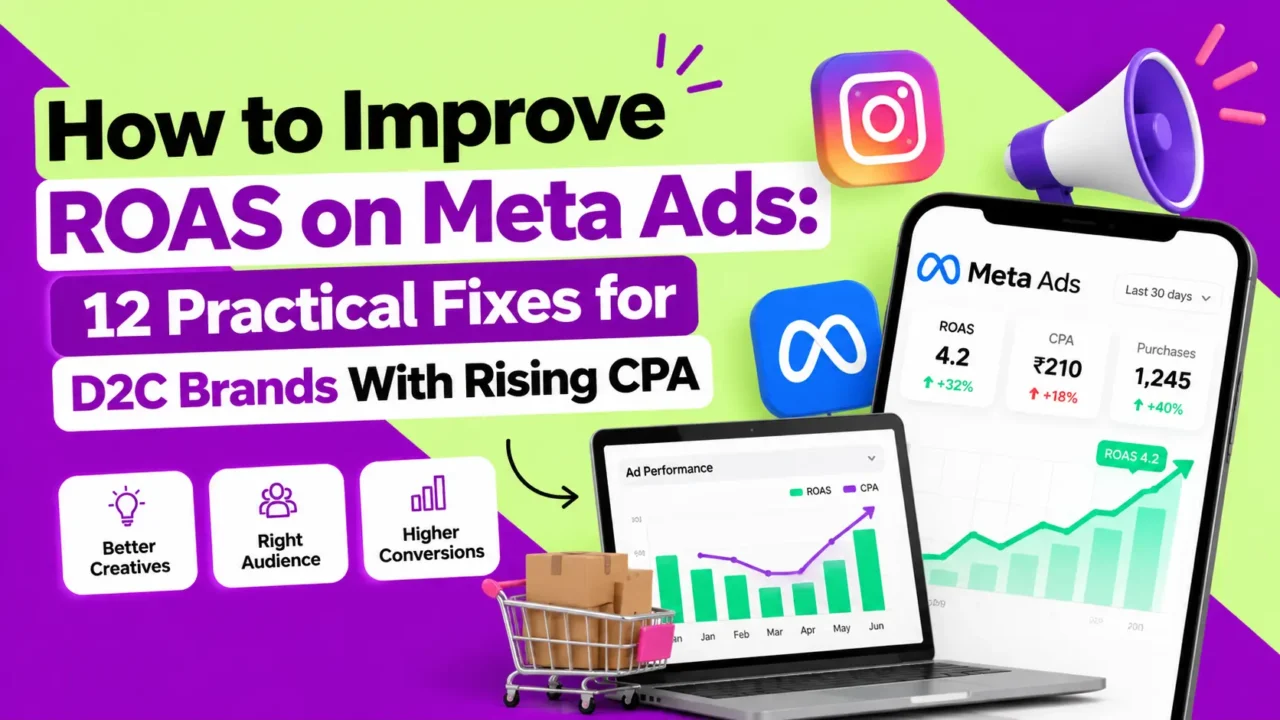
If you are googling how to improve ROAS, chances are your Meta dashboard is showing flat revenue and a climbing CPA while your agency keeps saying “learning phase.” For a D2C brand in India, that’s the point where cash flow anxiety kicks in and founders start slashing budgets too early.
The good news: most Meta ad accounts bleed money for boring, fixable reasons, not because the product is bad. Once you tighten your numbers, creative, and funnel, you can usually pull ROAS back within 4–6 weeks without doubling spend or burning your team out.
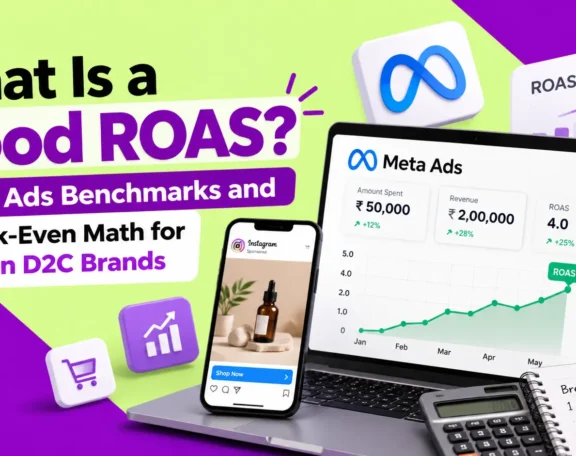
Know Your Real Break-Even ROAS First
If you don’t know your break-even, every discussion on how to improve ROAS is guesswork. Before touching ads, sit with your contribution margin, average order value, and repeat rate, then decide the lowest ROAS you’re willing to accept on cold, warm, and remarketing campaigns.
Most Indian D2C brands selling below ₹3,000 AOV underestimate shipping, COD RTO, and prepaid discounts. That pushes real break-even ROAS higher than you think. Map it clearly: ROAS 1.8 might be fine on prospecting if remarketing and repeat customers bring blended profit back above zero.
If you are unsure about benchmarks by category, use a calculator or a simple sheet and pair it with guidance from resources that explain what a good ROAS looks like on Meta ads for Indian brands. Treat that as your guardrail, not a vanity target.
Fix Tracking Before You Blame The Algorithm
Rising acquisition costs often start with bad data, not bad ads. If your pixel or CAPI setup is broken, Meta won’t know which users are actually buying, so the system keeps sending you low-quality purchasers that inflate volume but wreck profitability.
Run a sanity check: compare daily purchase numbers in Meta with your Shopify or WooCommerce backend. A 10–15% gap is normal; anything higher means you’re flying blind. Fix standard events, deduplicate pixel and CAPI, and clean up old, unused custom conversions cluttering the account.
Once tracking is stable, you can be more confident when you try to reduce the real cost of Facebook ads in India with bid, budget, or audience changes, because the feedback loop is finally trustworthy.
Restructure Campaigns Around Buying Stages
Many D2C founders increase roas on facebook ads just by cleaning up messy account structures full of dozens of tiny ad sets cannibalising each other. You don’t need that. You need a simple, stable structure mapped to how people actually buy from you.
Keep Prospecting Campaigns Broad And Stable
For cold traffic, two or three core campaigns are usually enough. Use broad or large interest stacks with purchase optimisation instead of dozens of micro interests. Let them run for at least a week before judging, unless results are clearly terrible from day two.
Resist the urge to touch budgets daily. For accounts under ₹50,000 a day, frequent changes keep you in “learning limited” forever and inflate your cost per purchase on meta ads. Make changes in 20–30% steps and give the system time to respond.
Separate Warm And Hot Remarketing
Remarketing works best when you respect intent. Keep website visitors and engaged viewers in one pool, and cart/checkout visitors in another with tighter windows and stronger offers. Stop blasting your hottest audiences with the same top-of-funnel hooks.
An agency like Unikqo will typically map these journey stages clearly and plan creative and offers for each, so you aren’t guessing which touchpoint is doing the real conversion work.
Get Serious About Thumb-Stopping Creatives
Most Meta ad accounts have a targeting problem only on paper; in reality the problem is creative fatigue. People who might buy scroll past your ads because your hooks and formats look exactly like every other brand in their feed.
Lean On UGC And Demonstrations
For D2C, the fastest way to reduce cpa facebook ads is often a strong user-generated video showing the product in context. Think a 20–30 second demo with a clear “before/after” moment, shot vertically, with subtitles burned in for silent viewing.
If you don’t have a steady supply of this kind of content, build a small roster of real customers or UGC creators who can deliver new angles monthly. Resources on how UGC creators in India structure their work can help you brief talent better and pay them fairly.
Test Hooks And Offers, Not Just Colours
Too many brands obsess over backgrounds and fonts while ignoring the first three seconds of the video. Test different opening hooks: a bold claim, a problem statement, a quick demo, or a reaction shot. Small changes here often swing ROAS more than any bid tweak.
For static images, start with a product-in-use shot, one clear benefit line, and a simple offer. Fancy layouts rarely outperform something clean that loads quickly on patchy mobile data.
Bid, Budget And Placement Tweaks That Actually Matter
Meta gives you endless toggles, but only a handful really move performance. The rest mostly introduce noise. Focus on the ones that directly affect delivery, cost control, and how the system explores new pockets of buyers.
Use Cost Caps Sparingly
Cost caps sound like an easy way to control spend, but set them too low and your delivery tanks. Treat them as a guardrail for proven ad sets where you know the math, not as a default for experiments or new audiences you’re still learning about.
When you’re testing meta ads optimization tips, start on lowest cost, find a stable CPA, then layer cost caps slightly above your target if you see wild spikes. Don’t strangle good creative by being too aggressive on day one.
Let Advantage+ Work, Then Trim The Fat
Advantage+ shopping campaigns can work well for D2C if you feed them enough creative variety and clear exclusions. Start broad, then check reports to see which creative and placements are actually driving purchases instead of vanity clicks.
Once you spot trends, move low-intent placements into a separate campaign or turn them off, and allocate more budget to the segments driving your strongest cost-per-result in line with your break-even ROAS.
Fix Your Site, Offers And Post-Purchase Flows
Media buying can’t save a slow site or a confusing checkout. If mobile pages take more than three seconds to load on 4G, you’re throwing money away. Most D2C brands underinvest here because it feels like a “tech problem” instead of an ad problem.
Start with basics: compress images, remove pop-ups that block the first view, and trim form fields in checkout. Even modest changes to load time and clarity can quietly lower drop-offs and how to lower cost per purchase meta ads without touching bids.
Next, build simple post-purchase flows. Use email and WhatsApp to drive second and third orders with relevant recommendations, not endless discounts. The stronger your LTV, the more freedom you have to bid aggressively and still come out ahead on ROAS.
If you don’t have CRO or funnel expertise in-house, look for a partner who understands both performance and on-site work. Reviewing an agency’s past campaigns for D2C clients will tell you quickly if they think in terms of full-funnel, not just ad screenshots.
Know When To Call In Specialists
There’s a point where internal tinkering hits a wall. If you’re spending over ₹3–5 lakh a month and still can’t move ROAS after four to six weeks of structured testing, the opportunity cost of “figuring it out yourself” gets high.
This is where a performance-focused partner who also runs influencer campaigns and UGC ads can help. Agencies that integrate creator work with paid media, like Unikqo does with Meta performance, usually find efficiencies that a media-only or influencer-only shop will miss.
Before you sign anyone, ask to see their planning process, reporting dashboards, and how they decide when to scale, pause, or rebuild campaigns. A good partner should be able to explain that in plain language and show examples, not jargon-heavy decks.
Why D2C Brands Trust Unikqo For ROAS-Focused Meta And Influencer Campaigns
The agency works backwards from ROAS and CPA targets, not vanity metrics. Instead of pushing you into big influencer spends and hoping something sticks, the team starts with your break-even numbers, then designs creator content and Meta campaigns that can be measured against actual revenue and cost per purchase.
The single clearest USP is this: creator selection runs on audience data and authenticity checks before a rupee is spent, and every campaign is tracked to a business outcome on a live dashboard you can see. In practice, that means AI-powered shortlisting, verified creators only, and clear media plans that connect UGC, whitelisting and paid Meta ads so your cold, warm and remarketing flows stay aligned. You see clicks, engagement and ROAS in one place, while a dedicated account manager runs coordination end to end. If you want to understand how the agency approaches influencer marketing for D2C brands before committing budget, it’s easy to ask for a no-pressure walkthrough of their planning and reporting flow.
Conclusion
Improving ROAS on Meta isn’t one magic setting; it’s a sequence: know your break-even, clean tracking, structure campaigns by intent, refresh creative, fix your site, then scale calmly. If that sounds like a lot, a specialist such as Unikqo can help you decide how to improve roas without throwing more money at guesswork.
Pick two or three fixes from this list that match your stage, implement them over the next month, and keep a close eye on blended numbers, not just isolated campaigns. Small, disciplined changes compound faster than reactive “turn things off” decisions.
Frequently Asked Questions
How to improve ROAS on Meta ads if my budget is under ₹1 lakh?
The fastest way to improve ROAS on Meta ads at low budgets is to cut waste and tighten the funnel. Focus spend on one or two prospecting campaigns, one remarketing pool, and 3–5 strong UGC creatives. Kill anything that doesn’t get saves, clicks, or add-to-cart quickly, and send traffic only to fast, simple product pages.
How can I increase ROAS on Facebook ads without scaling budget too fast?
You increase ROAS on Facebook ads by scaling what already converts instead of chasing new audiences every week. Once an ad set hits stable CPA, raise budgets in 20–30% steps and leave it untouched for several days. Keep feeding fresh creatives into winners, and move poor performers out instead of rebuilding the whole campaign structure.
How do I reduce CPA Facebook ads if my niche is very competitive?
The best way to reduce CPA Facebook ads in competitive niches is to sharpen positioning rather than fight on bids alone. Call out specific use-cases, regional cues, or problems your product solves better than generic rivals. Pair this with tight remarketing windows and stronger offers for cart visitors so you convert more of the traffic you already pay for.
What common mistakes ruin Meta ads optimization for Indian D2C brands?
The most common mistake is chasing hacks while ignoring offer clarity and site speed. Many brands also split budgets across too many ad sets, change bids daily, or mix cold and warm traffic. Clean structures, consistent testing, and mobile-first creatives usually beat constant tweaks to minor Meta ads optimization tips that only add noise.
How to lower cost per purchase Meta ads during festive seasons?
You lower cost per purchase Meta ads during festive peaks by planning your advantage instead of only raising discounts. Build engaged audiences weeks earlier with soft campaigns, then retarget them heavily once offers go live. Stagger sale phases, use stock or time scarcity in creatives, and be ready to shift budget quickly into the best-performing audiences and regions.