

 19 October 2026
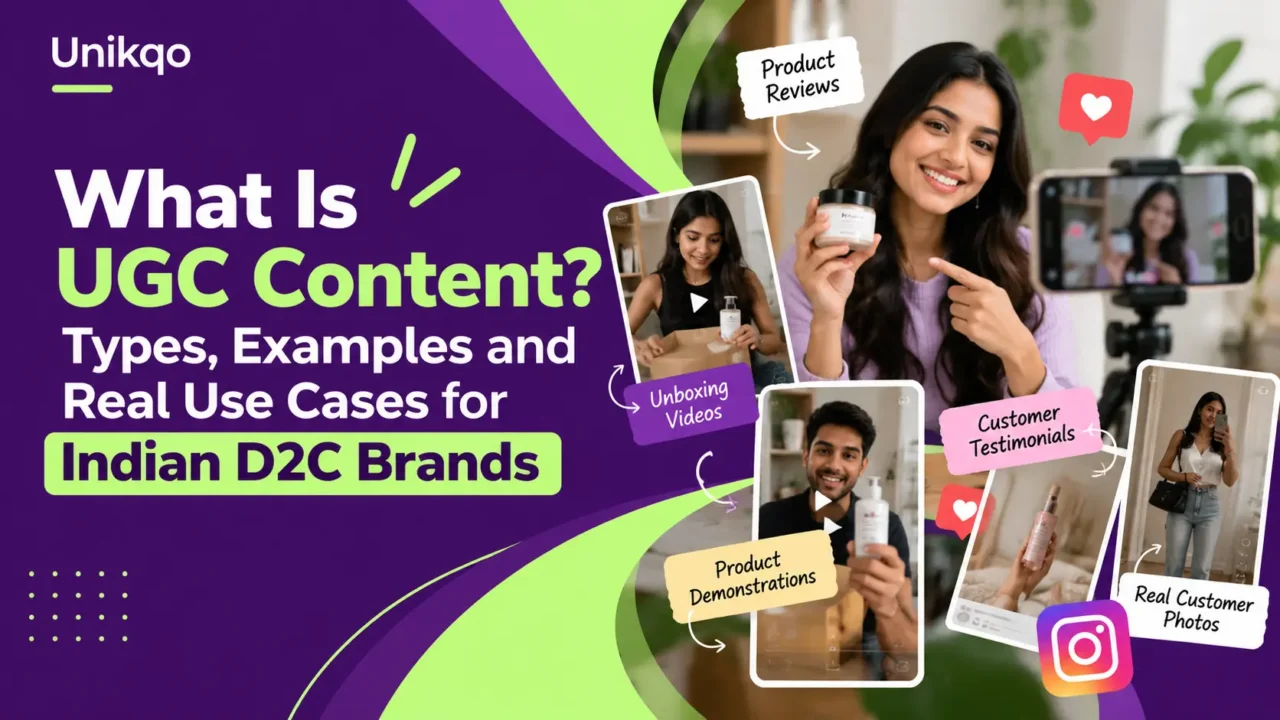
Table of Contents
If you sell directly to consumers in India, you’ve already felt the pressure: ad costs rising, attention spans shrinking, and organic reach falling. That’s where understanding what is UGC content really starts to matter, not as a buzzword but as a serious sales channel.
The simple version: your buyers trust other buyers more than they trust your brand ads. But treating UGC as “random customer photos” is why most Indian D2C brands collect screenshots instead of conversions. Used right, UGC becomes always-on proof that real people are using your product, in real Indian contexts, every single day.
UGC Meaning In Marketing For Indian D2C Brands
In plain terms, UGC meaning in marketing is any content about your brand created by customers or creators, not by your in-house team. Think Instagram Reels shot in a 2BHK kitchen in Pune, a YouTube review filmed in Hinglish, or a WhatsApp selfie with your product and a quick line of feedback. For Indian D2C brands, the real power comes from context. A skincare routine filmed under tube-light in a Delhi hostel hits different from a glossy studio ad. That “this looks like my life” feeling is exactly what pushes shoppers from cart browsing to card payment.Types Of UGC Content That Actually Work In India
There are many types of UGC content, but only a few consistently move the needle for Indian D2C brands. You don’t need all of them. You need two or three that you can repeat every month without burning out your team or your customers.Everyday Social Posts And Stories
This is the casual stuff: customers posting Reels, Stories, tweets, or LinkedIn posts about your product. They tag you, you repost, and it slowly builds a wall of proof. The mistake most brands make is treating these as one-off “nice to have” mentions instead of turning them into a content library organised by product, city, and use case.Long-Form Reviews And Testimonials
Longer reviews matter more for bigger-ticket purchases. A 3-minute video explaining why someone switched to your mattress, water purifier, or premium coffee tells a story a static rating never can. Treat these like assets for landing pages and email flows, not just something you post once on social and forget.Creator-Style UGC Videos
This is where you brief micro-influencers or everyday creators to produce content that looks organic but is structured around hooks and talking points. Agencies like Unikqo often turn these into UGC ad creatives for Meta, blending influencer campaigns with performance marketing so you get both reach and tracked conversions from the same video.Before-After And Comparison Content
For beauty, fitness, home cleaning, or fashion, comparison content is gold. Before-after photos, “old vs new” outfits, or “previous brand vs this brand” routines answer questions shoppers usually ask in DMs. You do have to set clear guidelines so claims stay honest and compliant, especially on health or weight loss.Real UGC Examples For Indian D2C Brands
Looking at abstract ugc examples for brands isn’t enough; you need to see how they map to actual Indian buying behaviour. Here are patterns that keep showing up in D2C case reviews and campaign breakdowns.Tier-2 City Lifestyle Reels
For apparel, beauty, and affordable gadgets, Reels from tier-2 and tier-3 cities often convert better than polished metro shoots. A creator in Indore styling the same kurta three ways for college, tuition, and family outings feels closer to how most Indian shoppers actually live.Kitchen And Home “Jugaad” Content
Indian audiences love hacks: how a single masala blend cuts cooking time, or how a storage product reduces fridge chaos. These UGC clips work especially well as short hooks at the start of YouTube influencer marketing content, then get sliced into 15–30 second ad creatives.Unfiltered Product Trials
For skincare, haircare, and wellness, unfiltered “first try” videos resonate more than heavily edited routines. A simple format like “Day 1 / Day 15 / Day 30” with honest commentary tends to earn comments and saves, which pushes your content higher in feeds without extra spend.How UGC Fits Into Your Marketing Funnel
Most teams treat UGC as a top-of-funnel awareness play, then wonder why they can’t attribute revenue. In reality, UGC can support every stage, from first exposure to second and third purchase, if you map formats to funnel stages instead of just collecting content.Top Of Funnel: Discovery And Trust
Short Reels, creator posts, and casual Stories work best to introduce your brand without feeling like an ad. Here, quantity matters: seeing 10–12 different people talk about a brand across a month builds familiarity. Think of it as rented trust that warms people up for more detailed content later.Middle Of Funnel: Consideration And Proof
Once someone has visited your site or followed you, they need proof you deliver on your claims. Long-form reviews, before-after content, and FAQ-style videos belong here. This is where you start weaving UGC into product pages, retargeting ads, and influencer marketing services that focus on education instead of just aesthetics.Bottom Of Funnel: Conversion And Objection Handling
Closer to checkout, UGC should attack specific objections: “Will this shade suit my skin tone?”, “Will this bed fit my small room?”, “Is COD available?” Short clips answering these in context, shot by creators or real users, outperform generic benefit banners almost every time.Turning UGC Into Measurable Performance
The biggest gap in UGC strategies is measurement. Brands collect screenshots and save Reels, but few tag, track, and test systematically. That’s where understanding ugc marketing meaning in a performance context becomes important: it’s not just about content volume but about cost per purchase, return rate, and repeat order value. Agencies that connect UGC with paid media — the way Unikqo combines creator campaigns with Meta UGC ads and whitelisting — can see which creator styles, hooks, and formats actually sell. Live reporting dashboards help cut creators who look great but don’t convert, and double-down on those who consistently drive profitable orders. In-house, even simple tracking helps. Label your UGC creatives clearly inside Ads Manager, group them into experiments (hook first vs demo first, Hindi vs English), and review weekly. Over a quarter, you’ll know what to brief future creators for instead of guessing every time.How To Build A Simple UGC Engine For Your Brand
If UGC is working only when you “remember to repost Stories”, you don’t have a system yet. A real engine has repeatable inputs (requests and briefs), a clear review step, and routes to distribute winning content through organic and paid.Step 1: Make It Easy To Contribute
Tell customers exactly what to post and where to tag you. Add a simple ask on thank-you pages, in delivery inserts, and in post-purchase emails: one prompt per touchpoint. For example: “Show us how you store this in your fridge” or “Film your first sip reaction.”Step 2: Incentivise The Right Content
Instead of vague “post and win” contests, give clear rewards for specific formats you need most: 30–60 second vertical video, before-after photos, or how-to Reels. Offer store credit, early access, or a feature on your page. The goal is not more content, but more usable content.Step 3: Add Light Structure With Creators
Once you know what resonates, bring in micro-creators who already speak to your target audience. A focused influencer marketing strategy aligns creator briefs with your funnel gaps instead of just chasing follower counts or vanity engagement.Step 4: Organise, Approve, And Reuse
Store UGC in folders by product, language, and theme (review, demo, hack, lifestyle). Document who gave permission, what rights you have, and where it’s been used. This turns scattered posts into a reusable asset bank you can plug into ads, email, site banners, and marketplaces.Working With An Agency On UGC
Once your basic system is running, the next jump is scale: finding the right creators, avoiding fake followers, and tightening attribution. This is usually the point where D2C founders start shortlisting an influencer marketing agency instead of managing everything in-house. Look for partners who start from business outcomes, not just aesthetics. For example, agencies that run creators through authenticity checks and audience insights — like the campaign tool Unikqo uses before finalising shortlists — tend to waste less budget on inflated accounts and misaligned audiences. Ask very specific questions: how will UGC feed into your Meta and YouTube performance campaigns, what does reporting look like week to week, and who actually manages creator communication. If the answers sound vague, assume the process is too.Why Indian D2C Brands Choose Unikqo For UGC-Led Campaigns
The agency’s approach is built for founders who care more about performance than pretty influencer decks. Instead of starting with “who is famous right now?”, the team starts with your unit economics and funnel gaps, then reverse-engineers creator selection, UGC formats, and Meta UGC ads to hit those numbers. The clearest difference from a typical influencer shop is simple: creator selection runs on audience data and authenticity checks before a rupee is spent, and every campaign is tracked to a business outcome on a live dashboard you can see. Highlights brands usually weigh:- AI-backed discovery that filters by audience, category, language, and fake follower risk.
- A structured four-step campaign tool that turns vague briefs into clear deliverables and timelines.
- Performance media baked in from day one — UGC content is designed to plug into paid ads and whitelisting, not sit on Instagram alone.
- Industry-specific playbooks for Indian D2C and ecommerce, so UGC is mapped to your actual buyer journey, not generic awareness goals.

What Is a Good ROAS? Meta Ads Benchmarks and Break-Even Math for Indian D2C Brands – Unikqo
22nd October 2026 , 12:28 pm
[…] you’re new to creator content, read this guide on UGC content types and examples. Use it to brief your creators or internal team instead of asking for generic “one […]