
 11 September 2026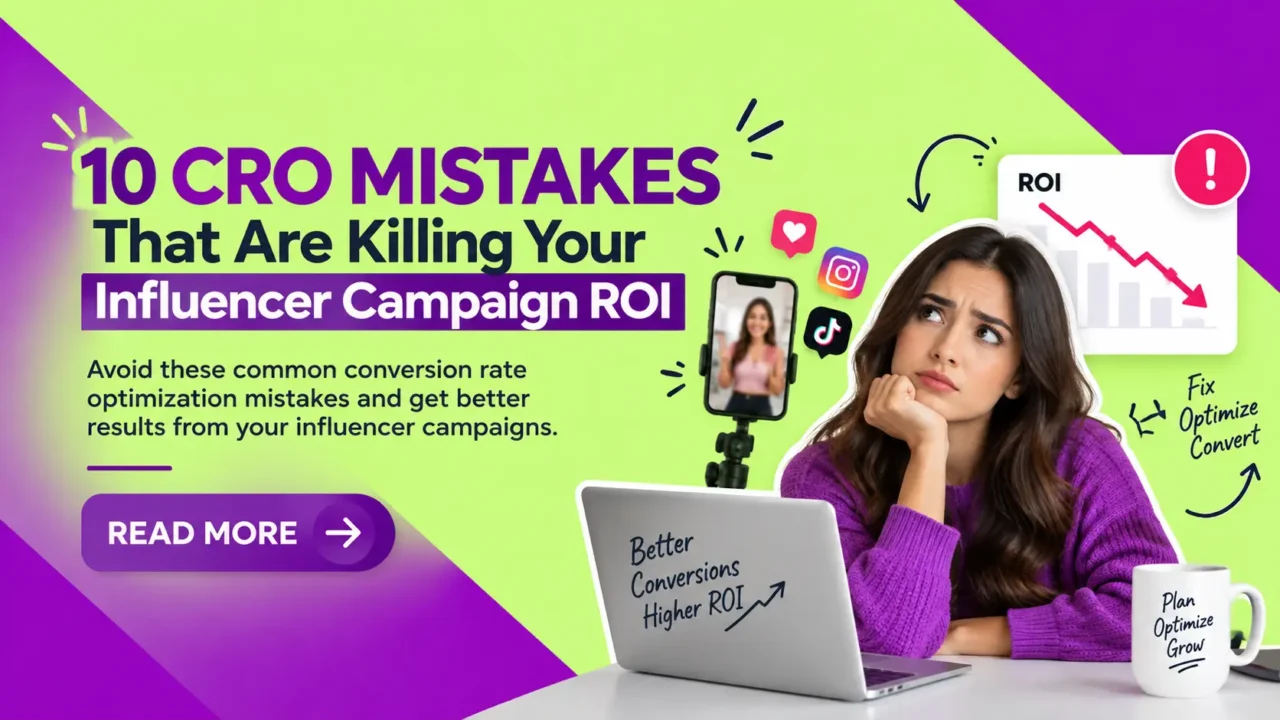
Table of Contents
If your latest influencer push brought a spike in traffic but barely any sales, you’re not alone. Most brands repeat the same cro mistakes ecommerce teams make when they treat influencers as awareness only, not as a performance channel.
The painful part is that the waste doesn’t show up in the creator content, it hides on your site and in your funnel. Fixing what happens after the click is usually where ROI jumps, not by squeezing creators for cheaper posts.
Why Influencer Traffic Behaves Differently
Before you fix conversion rate optimization mistakes, you need to understand the traffic you’re working with. Influencer visitors don’t behave like search or remarketing traffic. They arrive mid-scroll, half-distracted, and usually on mobile. Most of them have only seen a 15–30 second story or Reel. They’re curious, not committed. If your page expects them to read long copy, dig through menus, or create an account before they see value, they drop. That’s the real reason many brands ask why influencer campaigns don’t convert.How Warm Is Influencer Traffic Really?
Think of influencer clicks as “socially warmed cold traffic”. They trust the creator more than your brand, but they haven’t built any direct trust with you yet. That means your first job isn’t to shout features, it’s to help them quickly confirm the creator didn’t overpromise.CRO Mistake #1: Sending All Traffic To The Homepage
This is the classic one. A creator shares a link, thousands click, and they land on a generic homepage built around your brand story, not the campaign hook. Bounce rates spike, and everyone concludes influencer doesn’t work. Homepage traffic gives you no intent signal. You’re forcing a cold visitor to figure out what to do next. For campaign traffic, you need focused landing experiences that match what was said in the video or post, otherwise you’re inviting basic landing page errors ecommerce brands can’t afford.Fix: Build Campaign-Specific Landing Pages
For every meaningful influencer campaign, create a dedicated landing page or at least a variant. Mirror the creator’s promise in the headline, show the exact products featured first, and keep navigation stripped down. If you’re sending traffic to PDPs, tighten them for social proof, clarity, and mobile first.CRO Mistake #2: Weak Or Misaligned Offers
Influencer content can carry desire only so far. The offer on your page either closes the gap or kills momentum. A flat 5% discount rarely moves the needle, especially in categories where shoppers expect bolder promos. The mistake isn’t just the size of the offer, it’s the fit. A niche skincare brand might do better with a free mini or routine guide than a small price cut. A fashion brand might win with limited-time access to new drops. You match the incentive to the moment the visitor is in.Fix: Make The Offer The First Clear Thing
Place the offer high on the page, restate the creator’s code or link benefit, and make redemption brain-dead simple. No hidden conditions, no vague “T&Cs apply” without context. If they have to guess what they’re getting, you’re losing them silently.CRO Mistake #3: Ignoring Mobile And Load Speed
Most influencer traffic in India hits you from Instagram or YouTube on mid-range Android phones, often on 4G that isn’t exactly blazing. If your page takes more than a few seconds, half your paid traffic is gone before analytics even logs them. Even when pages load, bloated themes, pop-ups stacked on top of each other, and heavy hero videos slow everything down. The experience feels glitchy. That’s where so many conversion rate optimization mistakes hide: not in copy, but in basic performance.Fix: Strip, Compress, Then Test On Real Devices
Before pushing a campaign live, open your landing page on a couple of average phones, on mobile data, not office Wi‑Fi. Remove non-essential scripts, delay non-critical widgets, compress images, and keep pop-ups to one well-timed prompt at most.CRO Mistake #4: Treating Influencer And Paid Media As Separate Worlds
Plenty of brands run organic creator campaigns in isolation, then run Meta ads off generic product shots. You end up with two fragmented journeys instead of one clear path from content to cart. That disconnect is a big reason why influencer campaigns don’t convert as well as they should. Teams that win here repurpose the strongest creator content as UGC ads and run whitelisting from creator handles. Agencies like influencer marketing services that already tie creator work to Meta performance usually see cleaner data and easier scaling.Fix: Build A Single Funnel, Not Two Channels
Plan your campaign with both organic and paid in one flow. Decide which creators will also be used for UGC ads, what landing pages both will send to, and how you’ll segment campaigns in Ads Manager. It’s one performance system, not separate “brand” and “performance” budgets.CRO Mistake #5: No Clear Tracking Or Attribution Plan
If your only metric is “did sales go up this month?”, CRO will always look fuzzy. You need a tracking setup that separates influencer traffic and shows you what happens from click to checkout. That starts with basics: UTM parameters on every link, distinct discount codes per creator, and events cleanly configured in your analytics tool. Without that, any discussion about landing page errors ecommerce brands should fix gets stuck in opinions.Fix: Decide Your Measurement Model Before Launch
Agree upfront how you’ll attribute revenue: last click, view-through windows, assisted conversions. Tools that offer live reporting dashboards across clicks, engagement, and ROI make optimisation much easier. Agencies that work this way, including Unikqo, tend to cut underperforming creators faster and double down on what’s working.CRO Mistake #6: Forcing First-Time Buyers Into Hard Commitments
Influencer visitors are discovering you for the first time. Throwing long forms, mandatory account creation, or aggressive subscription pushes at them early creates friction. They came to buy a product they just saw, not sign up to a relationship. Simple tweaks help: guest checkout first, clear payment options, and trust badges close to the primary CTA. If you want emails or WhatsApp opt-ins, move them later or tie them to a real perk instead of a generic “get updates”.CRO Mistake #7: Ignoring Post-Click Messaging
Plenty of brands obsess over the creator brief and ignore what happens after someone clicks. If your confirmation page, cart messages, and follow-up emails don’t match the tone and promise of the influencer, the experience feels disjointed. This mismatch shows up especially hard when return policies, delivery timelines, or product limitations weren’t clear on the landing page. That’s why some shoppers complain, refund, or quietly never buy again.Fix: Map The Whole Journey, Not Just The First Page
Audit the full path from story swipe-up or bio link through to order confirmation and even the first transactional email. Remove surprises, restate key benefits, and keep language close to how the creator framed your brand. Message consistency is a CRO lever, not a nice-to-have.CRO Mistake #8: Not Adapting Strategy For Different Influencer Types
A Reels-first fashion creator and a long-form tech reviewer send very different traffic. Treating them the same is lazy and expensive. The former might need quick-add bundles and simple size guidance; the latter might need comparison charts or longer PDPs. Segment your landing pages and offers by content format and audience behaviour, not just by creator tier. For deeper guidance on tailoring pages, read this piece on turning influencer traffic into customers.CRO Mistake #9: Choosing Creators On Vibes, Not Data
Plenty of teams still pick influencers based on follower count, aesthetic, or who the founder happens to follow. That’s how you end up with pretty posts and zero qualified traffic. Audience mismatch is one of the quietest but costliest conversion rate optimization mistakes. Look at audience geography, age, income proxies, and past brand categories that actually sold, not just engaged. Agencies that run creators through authenticity and audience checks, the way structured campaign management recommends, spot fake followers and weak fit early.CRO Mistake #10: Treating Influencer CRO As A One-Off Fix
Some brands run a single “CRO project” between campaigns, change a few page elements, then move on. Influencer-driven ecommerce isn’t static. Formats change, platforms shift emphasis, and user behaviour reacts to seasonality and price. Strong teams treat CRO as an ongoing habit: they run A/B tests, review funnel performance after each flight, and keep a running backlog of hypotheses. If that sounds heavy, start simple: one page, one test, per month is already an improvement.Why Brands Choose Unikqo For CRO-Focused Influencer Campaigns
Most influencer agencies stop at matching you with creators and sending a monthly report. The team here wires CRO into the process from the start: audience data shapes creator selection, landing pages are planned around social traffic, and paid performance on Meta is built into the same funnel instead of being a separate line item. The single clearest USP is simple: creator selection runs on audience data and authenticity checks before a rupee is spent, and every campaign is tracked to a business outcome on a live dashboard you can see. In practice, that means:- AI-powered discovery and authenticity vetting, so you avoid paying for fake or poorly aligned audiences.
- A four-step planning flow that locks in goals, budgets, deliverables, and CRO priorities before briefs go out.
- Organic influencer content and UGC ads built as one system, not two disconnected campaigns that fight each other.
- Industry-specific playbooks for Indian D2C and ecommerce, with fast tests on offers, creatives, and funnels after each flight.