
 15 September 2026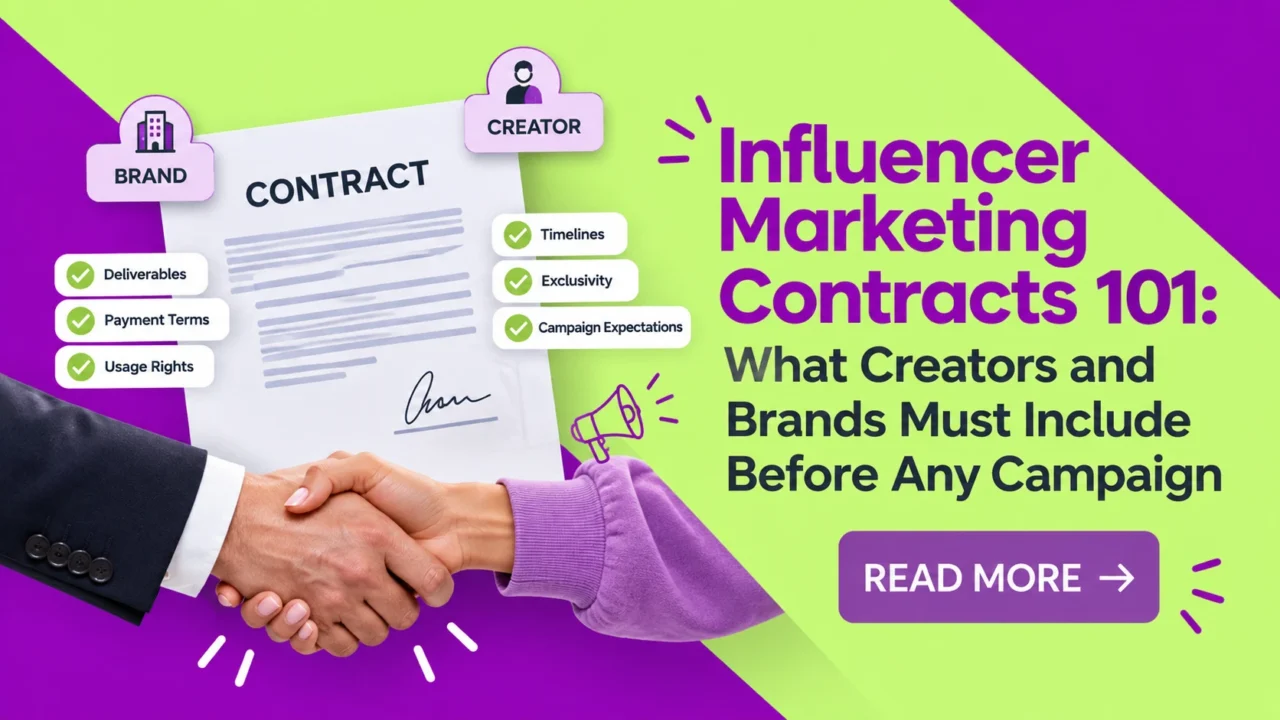
Table of Contents
If an influencer marketing contract only covers the fee and the number of posts, it’s a problem waiting to happen. One reshoot dispute or a Reel being used in an ad you never agreed to, and suddenly everyone is arguing over what was “understood”.
Brands and creators in India need contracts that are clear, specific and boring in the best way possible. That means spelling out scope, timelines, usage, approvals, payments and what happens when something goes wrong, instead of trusting memory or WhatsApp chats.
Why Every Campaign Needs A Written Influencer Marketing Contract
The main job of an influencer marketing contract is to stop misunderstandings before they start. Screenshots of DMs and verbal “pakka” promises won’t help when finance, legal or a platform policy team asks what was actually agreed. A written agreement forces everyone to slow down and get specific. In India, there’s another layer: tax, ASCI guidelines and platform rules that keep getting tighter. A proper agreement records who is responsible for disclosures, GST, TDS and any approvals from internal compliance. That paper trail matters a lot if a post is later challenged. On the practical side, a contract keeps the campaign moving. If the number of drafts, feedback cycles and approval cut-off dates are written down, brand managers stop chasing at midnight and creators know exactly when something is truly “urgent”. That alone saves friction on both sides.Key Clauses Every Influencer Agreement Should Include
Most fights between creators and brands come down to vague or missing clauses. A solid influencer marketing contract doesn’t have to be complicated, but it does need to hit a few non-negotiables clearly and calmly.Scope, Deliverables And Timelines
Start with the basics: what the creator is doing, in how many pieces, and by when. An influencer agreement template should always list formats (Reels, Stories, YouTube videos), number of edits, posting dates, and how long content must stay live. If the brand can request extra edits, cap how many are included before extra fees kick in.Content Rights And Usage
This is where people lose money. Usage terms decide who can use the content, where and for how long. Many brands assume they get full rights; many creators assume it’s only for one post on one platform. Spell out if the brand can run ads, use the content on their website, or cut it into other formats, tying that to clear usage rights influencer content language.Exclusivity And Conflicts
Exclusivity looks small on paper but can block real income. If a skincare brand wants exclusivity, is it for all skincare, only face serums, or just direct competitors they list out? How long does it last? The narrower and more specific it is, the easier it is for a creator to price it properly.Payment, Taxes And Commercial Terms Brands Often Miss
Money clauses are where a lot of Indian campaigns get stuck. A contract that just says “₹50,000 per post” without dates, modes and taxes is asking for last-minute confusion. Be precise about when an invoice is raised and when the brand will actually pay it. List the fee, currency, GST treatment and whether TDS will be deducted. For many creators, late payments hurt more than minor creative conflicts, so it helps to add a payment timeline, such as 50% on signing and 50% within a set number of days of final delivery. That way, nobody has to chase months later. Campaigns run with specialist influencer agencies in India, including teams like influencer marketing services providers, often include performance bonuses or make-good content for underperformance. If those are on the table, they should be written as clear scenarios, not “we’ll see based on results”.Usage Rights, Whitelisting And Paid Media In India
Organic posts and paid ads are not the same legally. If the brand wants to put budget behind your content, they need the right to do so, plus access to the creator’s handle where whitelisting is involved. That should never be buried in an email; it belongs in the influencer marketing contract with real dates and platforms.Organic Posts Vs Paid Ads
Think of the original post as one product and the paid version as another. Organic posts usually sit on the creator’s feed only. Once you add whitelisting or dark ads, the content might show to audiences who’ve never heard of the creator, and for much longer. That’s why fees often differ for organic vs ad usage.Geography, Duration And Platforms
Paid usage should be sliced cleanly: which platforms, which countries, and for how long. A simple “12 months, India-only, Meta ads” term is far less risky than vague “full rights in perpetuity”. Where agencies like Unikqo run influencer content as UGC ads on Meta, those ad windows and targeting rules are fixed upfront to avoid future disputes.Legal Compliance, Brand Safety And Platform Rules
On the legal side, Indian campaigns have to answer three main questions: are we following ASCI’s influencer guidelines, are we handling data safely, and who owns the risk if something goes wrong? The contract doesn’t remove risk, but it does say who carries what. For disclosures, don’t just write “follow ASCI”. Say how: the hashtags to use, where to place the disclosure, and how it should look in Stories vs Reels vs YouTube descriptions. For regulated categories like finance or health, that clarity is non‑negotiable. Then there’s brand safety: what happens if a creator is involved in controversy mid‑campaign, or an old post resurfaces? A well-drafted creator brand contract India usually lets the brand pause or pull content in limited cases, and gives the creator a say if the brand itself faces a PR issue.How Agencies And Creators Should Work Through The Contract
Most contract trouble shows up because nobody sat down to walk through the document together. It’s tempting to rush through signatures to hit a launch date, especially with trending audio, but a quiet 30‑minute review call is cheaper than one legal notice later.Negotiation Without Burning The Relationship
Negotiation doesn’t mean turning every line into a fight. Creators should flag dealbreakers early: non‑negotiable exclusivity, wide‑open usage rights, or unlimited revisions. Brands should come prepared with their internal guardrails instead of saying “we’ll ask legal” for every point.Working With Data‑Led Agencies
Agencies that run clear processes for creator selection and campaign planning tend to write cleaner contracts too. Teams like Unikqo, which use audience insights and authenticity checks before shortlisting, usually back those promises with written language on deliverables, reporting and what success looks like. Good agreements also tie smoothly into measurement. If your agency already thinks in terms of influencer marketing KPIs, they’ll be quicker to write clauses about access to data, reporting format and how often both sides sit down to review numbers.Practical Contract Tips For Indian Brands And Creators
A clean agreement doesn’t have to read like a 20‑page legal document. It just has to answer the questions that usually blow up a working relationship. A simple checklist can stop most headaches: who does what, when, with which rights, and for how much.- Keep one master email thread summarising the final commercial terms, linking back to the signed agreement.
- Attach the brief as a schedule so there’s no doubt about messaging, dos and don’ts and content hooks.
- Align on approval timelines for both sides, including brand delay scenarios and how they affect posting dates.
- Record how success will be judged: reach, clicks, sales, sign‑ups, or something else.