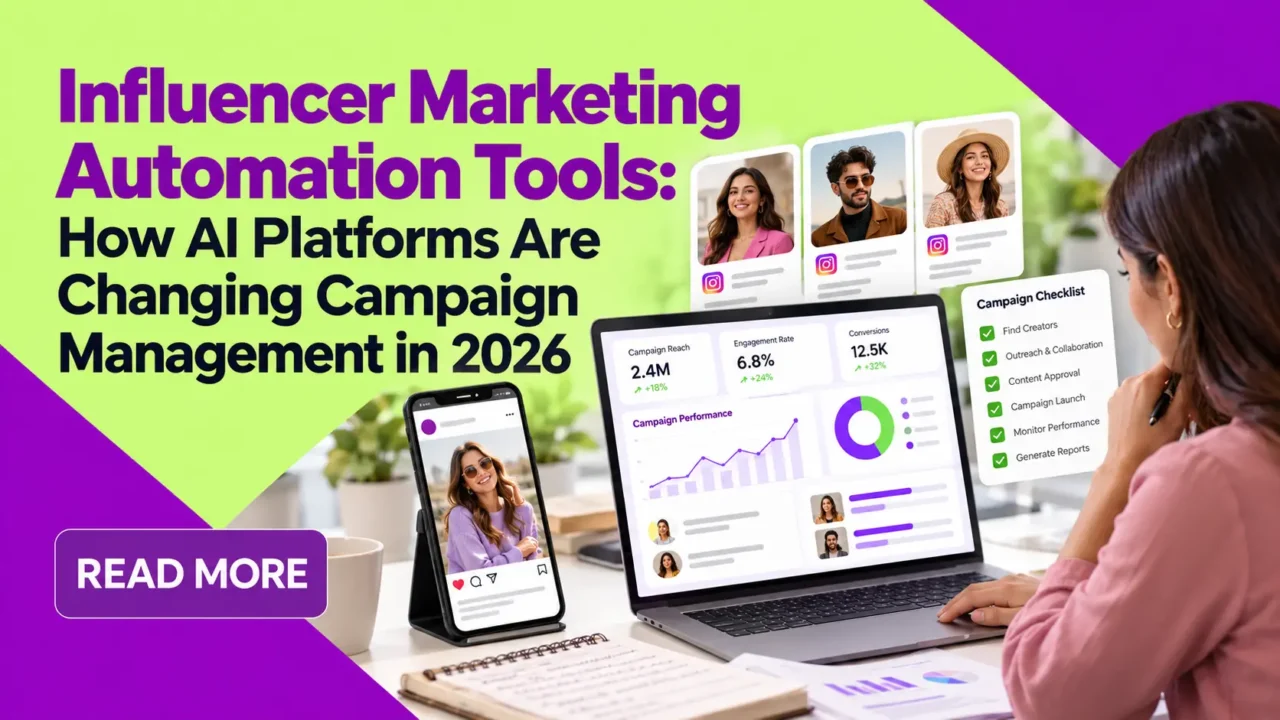
If you feel like you’re running influencer campaigns in spreadsheets and WhatsApp groups, you’re exactly who influencer marketing automation tools were built for. The right stack doesn’t just save admin time; it changes how you pick creators, predict outcomes, and protect your budgets.By 2026, AI isn’t a buzzword here anymore. It’s quietly sitting under your search filters, pricing suggestions, fraud checks, and even your creator emails. The brands getting real value from it are the ones treating these tools as part of their media system, not as a fancy contact list.
Why Automation Matters In Influencer Marketing In 2026
Most marketing heads don’t wake up thinking, “I need new software.” They wake up thinking, “Why did this campaign take eight weeks to start and still miss targets?” Automation matters because it shaves days off coordination and forces a bit of discipline into messy processes.A good platform centralises briefs, creator communication, contracts, content approvals and reporting. Instead of chasing screenshots, your team sees live posts, performance, and payments in one place. For large Indian brands running 50–200 creators per push, that’s usually the difference between one person managing campaigns and an entire team.On the strategy side, tools that combine historical performance with audience data help you model outcomes before you commit spend. That means you’re not just hoping that “20 reels with 1M+ creators” will move the numbers; you’re backing it with probability based on similar past campaigns.
Core Features To Expect From Influencer Marketing Automation Tools
At minimum, influencer marketing automation tools in 2026 should cover four pillars: discovery, workflow, compliance, and reporting. If one of these is missing, your team ends up back in Excel or legal email threads to plug the gap.Discovery is no longer about follower count filters. Strong platforms pull in audience demographics, brand safety flags, engagement quality and past brand collaborations. Some tools also surface fraud and fake follower signals, which matters in India where inflated profiles can burn lakhs in a single festive burst.On the workflow side, look for centralised brief templates, creator inboxes, and content approval flows. Integrating your influencer campaigns with billing and PO systems saves finance from manual reconciliations later, which is often where campaigns silently slow down.
AI-Powered Discovery And Shortlisting
AI influencer marketing tools can scan thousands of creators for you, but the real value is in how they rank them. Instead of serving a raw list, better systems score by fit: audience match, historic performance for similar brands, and even content style against your brand tone.This is also where agencies layer in their own data. Teams that run their shortlisting through a structured workflow, like the multi-step campaign tool used at Unikqo, tend to catch inflated audience numbers and poor engagement patterns before a rupee is allocated.
End-To-End Campaign Workflow Automation
Automation shines in the mundane steps everyone underestimates: collecting KYC details, issuing contracts, reminding creators about draft deadlines, and pushing approvals. A platform that sends smart nudges cuts the “sorry, missed this” messages dramatically.For Indian teams, GST treatment and influencer invoices matter too. Tools that generate basic reconciliations against deliverables and status tags reduce the back-and-forth between marketing, finance and agencies once campaigns go live.
How AI Is Changing Creator Management Day To Day
On paper, a creator management platform sounds like a glorified CRM. In practice, the AI layer turns it into a memory for your entire brand’s creator history: who performed on which campaign, who missed deadlines, who overdelivered, and which audiences actually clicked.Instead of one brand manager “knowing all the good creators”, the system knows. That matters when people move roles and when you’re scaling from 20 to 200 creators in a year. Past performance stops living in old email chains.
Pricing Guidance And Fair Offers
AI is increasingly used to benchmark fees against historical data. If a mid-tier beauty creator is quoting double the median CPM on your platform, the system can flag it, suggest a counter, or recommend reallocating to similar profiles with stronger performance.This doesn’t replace human negotiation, especially in India where relationships still shape rates. It does, however, give your team a data point so they don’t overpay just because a creator has a blue tick and good aesthetics.
Predicting Outcomes Before You Spend
The biggest shift is moving from “launch and pray” to predictive planning. AI models look at campaign goal, platform mix, audience overlap, and historic conversion data to estimate reach, clicks, or sign-ups before you sign contracts.Agencies that take this seriously will often walk away from flashy ideas that don’t model well on performance. That restraint can be more valuable than any creative concept they bring to the table.
What Indian Brands Should Look For In Influencer Software
Influencer marketing software India buyers face a noisy market: international SaaS tools priced in USD, local platforms bundling agency services, and DIY spreadsheets stitched together with form tools. A checklist helps cut through the noise.First, check Indian compliance features: GST fields, Indian payment flows, local language support where needed, and contracts aligned with Indian law. If your legal team has to rewrite every template, the tool isn’t saving you time.Second, ask to see how the platform handles fraud detection and audience authenticity. In practical terms, you want flags for bought followers, suspicious engagement spikes, and mismatched geography. That alone can protect six figures over a year.Third, see how well the software plays with others. Integrations with your analytics stack, ecommerce platform, and ad accounts let you attribute influencer work correctly instead of arguing about last-click conversions.
Agency-Plus-Tool Or Tool-Only?
If your team has strong in-house strategy and creator relationships, a tool-only approach might work. You’ll still need someone internally to own it and push adoption. Treating it as “yet another login” usually kills value within a quarter.Brands that prefer an accountable partner often work with an agency that runs its own platform and process. In that model, the tool is invisible to you; what you see are structured plans, transparent reports, and a single owner for outcomes.
Where Agencies And Automation Platforms Fit Together
Automation handles volume; humans handle judgment. AI can tell you which creators look best on paper, but it can’t sit with your founder, unpack brand nuance, and decide how much risk you want to take with experimental formats.The more performance-linked your goals are, the more you’ll want tight connection between creator content and paid media. Agencies that combine influencer work with Meta ads and whitelisting tend to close the loop faster than teams that treat these as separate lines in the budget.Some brands in India prefer to have an agency like Unikqo operate the tooling, then log in only to the live reporting dashboards for quick checks on clicks, engagement and ROI, while keeping strategic discussions in recurring calls.
Contracts, Compliance And Risk
Automation tools help issue and store contracts, but they don’t replace good lawyering. Template agreements rarely cover edge cases like exclusivity conflicts, platform outages, or content takedowns for sensitive categories such as health and finance.Before you let any system auto-send contracts, align them with your legal team or draw on frameworks like those discussed in this guide to influencer marketing contracts. Cleaning up a bad agreement later costs more than customising it now.
Measuring What Matters, Not Just Vanity Metrics
Most platforms will happily show you reach, impressions and likes. The harder job is tying those back to business outcomes: site visits, sign-ups, revenue, or offline actions for categories like real estate and education.Look for tools that support unique discount codes, UTM-based tracking, and post-purchase surveys. That mix gives a more realistic view of impact, especially when journeys run across devices and weeks.If you operate in categories with longer sales cycles, such as property, frameworks borrowed from influencer marketing for real estate brands can help you focus on trust metrics and qualified lead volume rather than short-term sales alone.Agencies that build their processes around transparent tracking, like the teams behind festive influencer strategies, often use automation tools to expose performance data in real time instead of sending static PPTs once a month.
Common Pitfalls When Adopting Automation And How To Avoid Them
The first mistake is treating tools as a silver bullet. If your briefs are vague and your offers weak, automating them just lets you make the same mistakes faster. Start with a clear campaign structure, then layer tech on top.The second mistake is ignoring creators’ experience. Some brands force influencers to adapt to clunky portals with confusing steps, then wonder why content quality drops. If your platform adds friction, creators will prioritise brands that are easier to work with.The third is underinvesting in change management. Someone in-house needs to own the setup, integrations, and internal training. Without that, seats go unused and you’re back to WhatsApp groups within a quarter.Finally, brands sometimes forget the human side of relationships. Automation can schedule reminders, but it can’t build goodwill. Regular check-ins, timely payments and sharing performance feedback still matter more than any feature list.
Why Brands Choose Unikqo For AI-Led Influencer Campaigns
Most influencer agencies still run on manual shortlists and screenshots; the team here runs campaigns through its own AI-led planning and selection flow. The core promise is simple: creator choices are based on audience data and authenticity checks before any spend, and every campaign is tied back to business outcomes in a live dashboard you can see.In practice, that means the agency’s four-step tool models goals, audience and budget, then narrows down verified creators whose followers, geography and engagement patterns fit. Performance media isn’t bolted on later—creator work and Meta ads sit in one plan, which is crucial if you want influencer marketing automation tools to feed real acquisition, not just awareness. Dedicated account managers handle creator relationships, content, and reporting end to end, so you see fewer internal loops and more clarity. If you’re ready to treat creator work like a measurable channel, not an experiment, a short call via the contact page is usually the easiest next step.
Conclusion
AI-driven influencer marketing automation tools are no longer optional extras; they’re the backbone of scalable creator programmes in 2026. The right mix lets you predict outcomes, cut manual work, and treat influencers as a structured channel instead of a series of one-off experiments.If you’re planning serious investment here, pairing strong software with an experienced partner like Unikqo gives you both a disciplined process and the data visibility to keep influencer marketing automation tools delivering against real business goals.
Frequently Asked Questions
How do influencer marketing automation tools help day-to-day campaign work?
Influencer marketing automation tools reduce manual chasing by centralising creator data, briefs, contracts and reporting in one place. Your team can move from scattered sheets and chats to structured tasks, approvals and timelines. When combined with clear goals and consistent offers, they cut launch times and make results easier to compare across campaigns.
How much do AI influencer marketing tools typically cost in India?
AI influencer marketing tools in India usually run on monthly subscriptions, tiered by number of users and active campaigns. Entry plans can be affordable for lean teams, but advanced analytics, integrations and dedicated support push costs higher. The real question is whether the tool helps you avoid bad creator fits and wasted spend at a larger scale.
Is influencer marketing software India brands use different from global tools?
Influencer marketing software India teams pick often includes GST fields, Indian payment flows, PAN-based invoicing and templates closer to local law. Many global tools excel at analytics but assume USD billing, western categories and limited language needs. If you run regional campaigns or large festive pushes, local compliance and support can outweigh fancy extras.
How long does it take to see results from a creator management platform?
A creator management platform usually shows value within two to three campaign cycles, once enough data accumulates on performance, reliability and pricing. Early on, you mainly save time and avoid repeated onboarding work. As history builds, you can see which creators actually drive clicks or sales and prioritise them for long-term work.
What common mistakes should brands avoid when choosing automation tools?
The biggest mistakes are buying for features instead of fit, ignoring integrations with your existing stack, and underestimating onboarding effort. Teams often overlook how creators will experience the tool and whether it supports their preferred platforms. A short pilot with one focused campaign usually reveals gaps before you commit long term.


 07 October 2026