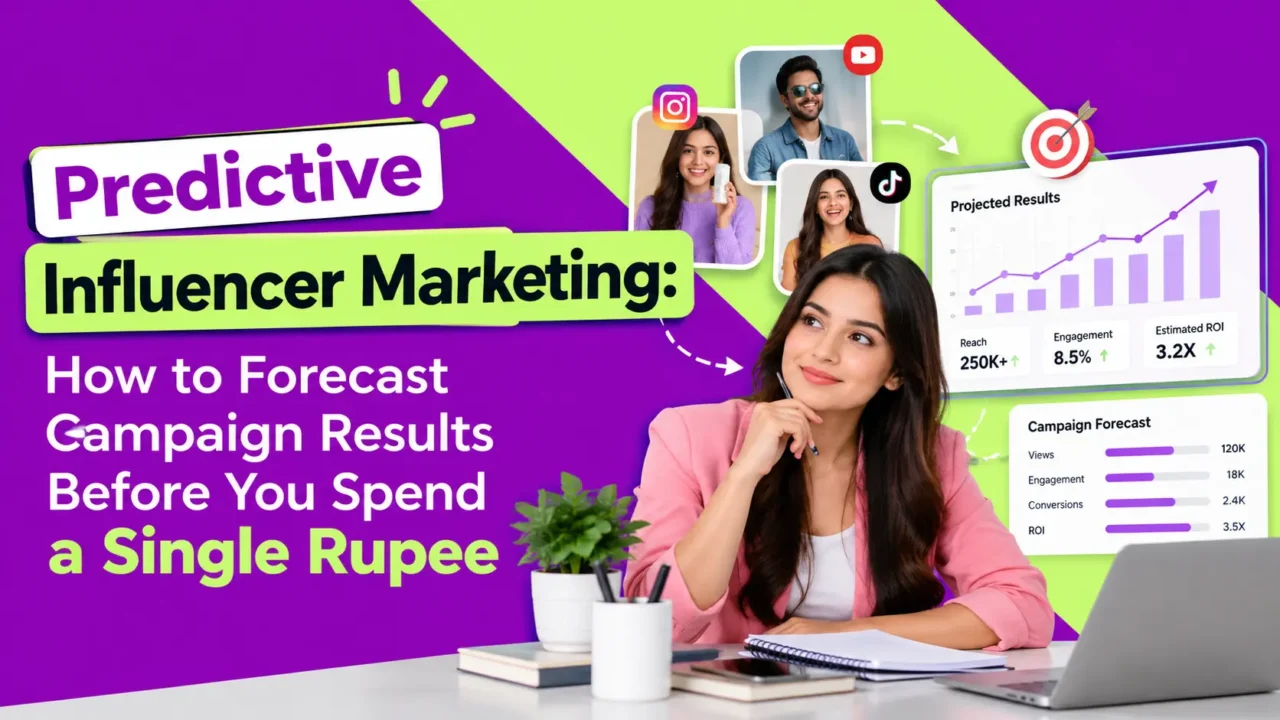
If you are tired of running influencer campaigns on gut feel, predictive influencer marketing is the shift you have been waiting for. The point is simple: stop guessing, start forecasting likely outcomes before a creator ever records a reel.Most Indian brands aren’t lacking creators or budgets. They are lacking clear expectations. What should 5 lakh in spend actually buy you? How many sales, app installs, or qualified leads are realistic? Getting to those numbers is where prediction, not post-mortem reports, starts to matter.
What Predictive Influencer Marketing Actually Solves
The core job of predictive influencer marketing is to turn campaign planning from “let’s try and see” into “we roughly know what should happen if these assumptions hold”. That doesn’t kill risk, but it makes it visible.Think about your last big push with creators. You probably had a list of handles, some past posts, and a rough sense of their vibe. What you didn’t have was a grounded model to predict influencer ROI from their audience and content history before signing the contract.Brands under pressure to show numbers tend to over-index on follower counts. That’s where money goes to die. Forecasting forces you to focus on the inputs that actually move performance: audience fit, content format, offer strength, and paid support.This approach also fixes a long-running problem: sales and brand teams talking past each other. When everyone is aligned to projected reach, clicks, and conversions, the marketing head can defend the budget internally without waving anecdotal screenshots.
The Data You Need Before You Forecast A Campaign
Good influencer campaign forecasting always starts with data you can trust. Not just from the creator, but from your own channels and past work.At a minimum, you want: audience geography and age splits, past reel/post reach, engagement quality, outbound click-through behaviour, and any previous collaboration metrics that look like your goal. That’s the baseline for meaningful influencer performance prediction.For brands that don’t yet have enough creator history, borrow data from your own ads and email funnels. How does your target audience usually move from seeing an offer to actually buying? What discount levels shift conversion? Those numbers anchor your assumptions instead of pulling them out of thin air.Indian agencies that take this seriously will also look at platform trends. For example, short-form video on Instagram can get strong reach but weak link clicks. YouTube integrations often produce lower volume but better intent. Those platform biases should sit inside your forecast model from day one.
How To Build A Simple Prediction Model For Influencer Campaigns
You don’t need a PhD or a giant data team to predict influencer ROI at a useful level. You do need a clear, repeatable model. Start by working backwards from the business goal instead of forward from the creator list.
Start From The Business Metric
Decide what you’re actually buying: new customers, trial signups, leads, or pure reach. If the answer is “a bit of everything”, narrow it down. A forecast that tries to serve five masters tells you nothing. One clean KPI makes every subsequent assumption more honest.
Turn Creator Metrics Into Funnel Assumptions
Next, convert creator stats into a simple funnel. Impressions to profile taps, taps to link clicks, clicks to site sessions, sessions to purchases or signups. Use conservative ratios based on actual data, not the best campaign you ever ran.This is where agencies like Unikqo stand out, because they run every shortlisted creator through audience authenticity and past performance data before they even land in the plan, so those funnel assumptions are grounded in reality rather than inflated vanity metrics.
Use Ranges, Not Single Numbers
No forecast is perfect, so stop pretending. Work with low, expected, and high scenarios. That gives you a sense of where risk sits and which part of the plan is most sensitive. If the numbers only work in the high case, the plan is weaker than your team is admitting.
Choosing Influencers With Prediction In Mind
Once your model exists, creator selection stops being a spreadsheet beauty contest and turns into a planning exercise. You’re choosing inputs for a forecast, not just familiar faces for a moodboard.Creators whose audiences sit mostly in Tier 1 cities with the right age band will usually beat bigger but misaligned audiences in any serious influencer analytics tools report. Alignment matters even more in India, where regional languages, price sensitivity, and payment habits vary wildly.Ask every agency pitching you how they verify audience authenticity and engagement quality. Do they have a standard flow to weed out fake followers, pods, and purchased comments? Agencies that can walk you through this step by step tend to run more reliable influencer campaigns than those who rely purely on relationships.As a rule of thumb, prioritise creators whose past branded content matches your goal. That means sales-focused reels if you’re pushing conversions, or longer YouTube explainers if you’re driving trial signups for a complex SaaS product.
Testing, UGC, And Paid Media: Where Prediction Gets Stronger
Most of the real forecasting power shows up once you start looping performance data back into your model. That’s where structured testing and UGC make a big difference.Instead of blowing the entire budget on one big launch, run a small test cohort first. Five to ten creators, one clear offer, one hero landing page. Use this test to refine your influencer campaign forecasting assumptions: actual click-through, add-to-cart, and conversion rates.Turn high-performing organic posts into UGC ads on Meta. Performance from these ads creates one of the best datasets you’ll ever get, because spend is controllable and results are easy to compare. Over time, this feedback loop will often cut your CPA by a noticeable margin.Some Indian agencies, including Unikqo, explicitly plan for this by pairing creator work with Meta performance campaigns, so every strong hook and visual from the collaboration gets a second life inside paid media instead of vanishing after 48 hours on Instagram.If you’re looking for creative formats that test well, consider mining ideas from resources on influencer marketing campaign ideas that already perform for similar D2C brands.
Setting Targets, Budget, And Measurement The Right Way
Forecasts are only helpful if they’re tied to clear targets and a sensible budget. Too many plans in India start with “we have 10 lakh” instead of “we want 1,000 new customers”.Lock your primary KPI, then shape the budget around what your model suggests is realistic. If your low-case scenario already looks like a loss, either sharpen the offer, demand better rates, or shift more spend into formats that historically convert, like creator-led performance ads.Decide your non-negotiable tracking setup before contracts go out: unique codes or links per creator, UTMs, post-level tracking sheets, and a single live dashboard the team refreshes daily. This goes beyond surface-level predict influencer ROI promises and into how money is actually managed week to week.For teams still building conviction, studying influencer marketing case studies from India can sharpen your sense of what “good” looks like across categories like beauty, fintech, and D2C fashion.If your brand depends heavily on tentpole events such as Diwali or year-end sales, your forecast should also reflect seasonality. Launching a push near Black Friday or Indian festive weeks, for instance, will change both costs and conversion probabilities compared to an off-season month.
Working With Agencies Without Losing Control Of The Numbers
Agencies can either sharpen your forecasting or blur it. The difference shows up in process. You want partners who talk in assumptions and ranges, not just in influencer names and moodboards.When you first speak to the team at any agency, push for specifics. How do they estimate reach and conversions? What does their pre-campaign planning document look like? Do you see creator-by-creator projections or just a big blended promise?Ask who owns optimisation decisions once the campaign is live. In strong setups, the agency has permission to move budget between creators, shift content angles, and adjust offers within a pre-agreed guardrail so they can act on live data without waiting days for approvals.Brands that want a deeper grip on experimentation can combine predictive work with sharper offer testing during key retail windows, using resources like this Black Friday marketing playbook for D2C as a reference for how to structure limited-time campaigns.
Why Brands Choose Unikqo For Predictive Influencer Marketing
The agency works differently from a typical influencer shop because the plan starts with numbers, not names. Every proposal is built around expected business outcomes, with creator shortlists scored on audience data and authenticity before negotiations begin. That means prediction isn’t a slide in the deck; it’s what shapes who gets hired and what they are expected to deliver.The single clearest USP is this: creator selection and campaign structure are driven by verified audience data, then tracked in real time against business KPIs on a live dashboard you can check any day of the week. In practice, that shows up as a four-step planning flow, AI-assisted discovery, and industry-specific playbooks for D2C, ecommerce, SaaS, and startups. The team also ties organic creator work tightly to Meta performance campaigns and UGC ads, so every strong concept gets a paid second run instead of living and dying in one post. If you want that same rigour applied to your next push, start with a quick chat through the influencer marketing overview.
Conclusion
Predictive influencer marketing is less about fancy dashboards and more about disciplined planning: clean data, honest assumptions, and tight feedback loops. Brands that do this well make fewer wild bets, learn faster, and waste fewer rupees on creators who can’t move their numbers.If you’d rather not piece all of this together alone, partner with an agency like Unikqo that treats forecasting as the starting point. Build your next campaign around a prediction you can defend, and let every rupee work harder than the last.
Frequently Asked Questions
How does predictive influencer marketing differ from regular influencer campaigns?
Predictive influencer marketing starts with a forecast, while regular campaigns often start with a creator list and a budget guess. You build expected reach, clicks, and conversions upfront, then choose creators and offers that fit those numbers. That makes it easier to compare proposals, spot weak assumptions early, and hold everyone accountable to more than vanity metrics.
How do I start influencer campaign forecasting for my brand?
You start influencer campaign forecasting by turning past results into a simple funnel and applying it to new creator proposals. Pull real numbers from previous campaigns or ads, then estimate impressions, clicks, and conversions for each shortlisted creator. Even a rough model will help you compare options, set realistic targets, and decide where to negotiate or walk away.
What tools are best for influencer performance prediction?
The best tools for influencer performance prediction combine audience authenticity checks with post-level analytics and click behaviour. Look for platforms that show historical reach, saves, shares, and link actions, not just likes and comments. If they can also plug into your ecommerce or CRM data, you’ll get a tighter view of which creators are actually moving revenue.
Is predictive influencer marketing worth it for small budgets?
Predictive influencer marketing is worth it even on small budgets because it stops you from overpaying for reach that never converts. With limited spend, you can’t afford bad bets, so a basic forecast helps you choose fewer but better-aligned creators. Over time, those early data points become your own benchmark for negotiating and planning bigger pushes.
How do I choose an agency that can predict influencer ROI?
You choose an agency for predict influencer ROI by asking how they build forecasts and what data they use. Request a sample plan showing creator-by-creator projections instead of a single blended promise. Agencies that can explain their assumptions, show live tracking setups, and talk through past hits and misses are usually better at treating performance as a process, not a pitch line.


 29 October 2026