
 11 October 2026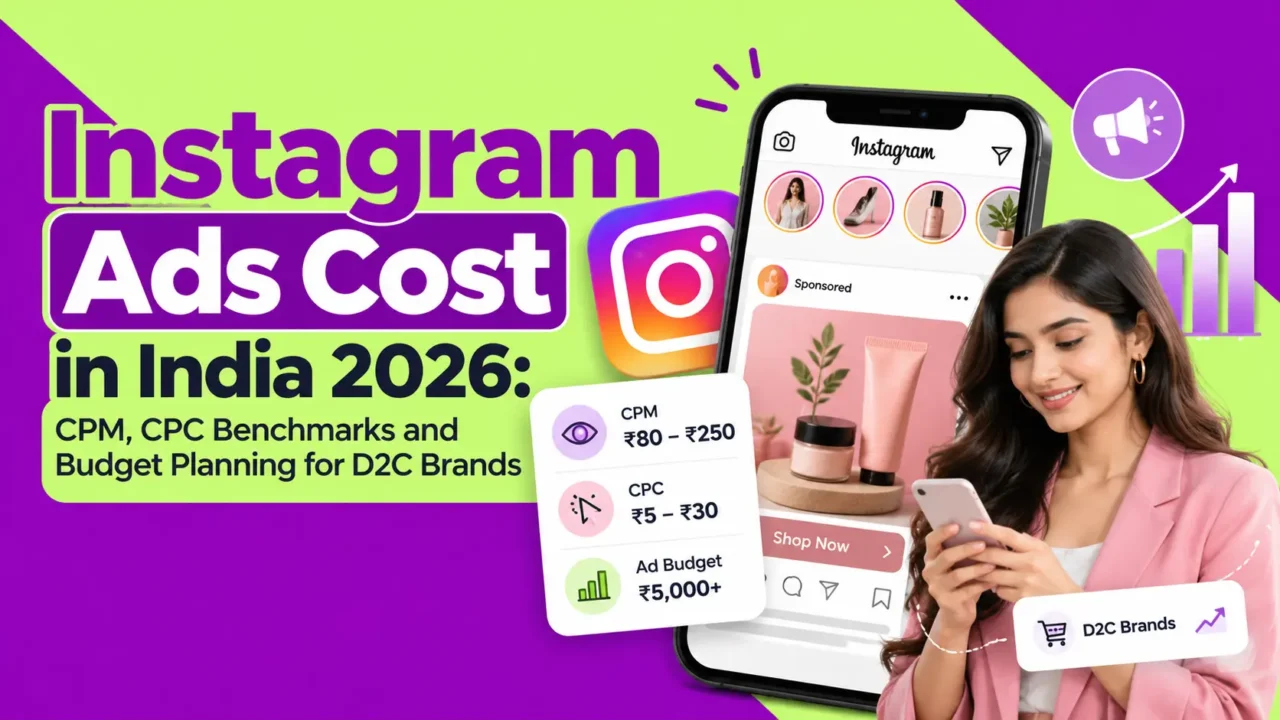
If you’re running a D2C brand, you’ve probably Googled instagram ads cost in india right after watching your Meta bill jump for the third month in a row. The problem isn’t just that costs are rising, it’s that you’re never sure what’s “normal” and what’s your targeting or creatives burning money.
This guide breaks down realistic 2026 CPM and CPC benchmarks for Indian D2C brands, how much you actually need to spend to learn anything, and how to build a budget that doesn’t implode in week two.
How Instagram Ad Pricing Really Works In India
Instagram prices media on an auction, but for a D2C marketer that translates to two metrics: what you pay to show 1,000 impressions (CPM) and what you pay when someone clicks (CPC). Once you understand those, the rest of your funnel maths starts to feel much less mysterious. Across D2C accounts in India, a broad feed-and-story mix typically lands instagram ads cpm india in the ₹70–₹180 range, with more competitive niches (beauty, fashion, fitness) clustering at the higher end. If you’re consistently above ₹200, either your audience is very tight, or your creatives are losing most auctions. CPC follows from CPM and click‑through rate. For performance-focused campaigns in 2026, most D2C brands see ₹6–₹18 CPC on prospecting and ₹3–₹10 on retargeting. Ultra-broad brand campaigns can be cheaper, but they rarely drive profitable sales unless your average order value is high.2026 Benchmarks: CPM, CPC And CPA For D2C Brands
Benchmarks aren’t targets, they’re guardrails. Use them to spot when something is off, not as a scoreboard. For cold traffic in India, a healthy starting CPM band is ₹80–₹150, with carousel and static images often slightly cheaper than Reels, but not always better at converting. On the click side, instagram ads cost per click india for D2C brands usually settles between ₹8–₹15 on prospecting if your creatives and landing pages are aligned. New accounts with no history can be 20–30% higher in the first month before the system learns who converts. Cost per acquisition (CPA) is where the real story sits. For brands with an AOV of ₹1,000–₹1,500, a sustainable new customer CPA tends to fall between ₹250–₹500. If your CPA is higher than your gross margin per order, raising budgets will only make the problem bigger.How To Use Benchmarks Without Chasing Them
Use benchmarks to ask “why”, not to force your numbers to match. For example, if your CPM is fine but CPC is high, your click‑through rate is weak and you need better hooks, not broader targeting. If CPM is high and CTR is solid, your audience or placements are probably too restricted.Instagram Reels Ads Vs Feed Ads: Cost And Impact
Short‑form video isn’t optional for D2C anymore. The question is how much instagram reels ads cost india relative to feed and Stories and whether the extra work pays off. On most Indian accounts, Reels CPM is either comparable to feed or up to 20% cheaper, but the spread is wide by niche. The catch is production. A single Reels concept usually needs 3–5 variations to avoid fatigue, so you spend more on content even if the media is cheaper. Brands that win with Reels build a content engine around hooks, strong first three seconds, and clear calls to action instead of obsessing over cinematic quality. Think of Reels as top‑ and mid‑funnel fuel. They drive strong view‑through and profile activity, then your feed and Stories retargeting quietly convert those warmed‑up users. Agencies like Unikqo often pair creator‑shot UGC Reels with Meta performance ads so the same assets sell across organic and paid, which helps spread production costs.Creative Formats That Usually Pay Off
- Before/after sequences that show a clear product impact.
- Unboxing or first‑impression clips from real customers or creators.
- Fast demos under 15 seconds focused on one benefit, not a catalogue.
Budget Planning For Small And Mid-Sized D2C Brands
If you’re working out instagram ad budget for small business india, the trap is going too low. ₹300–₹500 per day spread across five ad sets teaches you almost nothing. The algorithm needs enough conversions per week to learn; without that, your costs look worse than they should. As a rule of thumb, figure out your target CPA and work backwards. If you’re aiming for ₹350 per new customer and you want 90 new customers a month, you’re looking at roughly ₹31,500 in monthly ad spend, assuming you’re somewhere near benchmark conversion performance. For truly small D2C brands just starting, plan for a 6–8 week “learning budget” separate from your long‑term target. That’s the money you’re prepared to spend to find winning audiences, creatives and landing page angles before you judge whether Instagram as a channel is working.A Simple Test Budget Structure
A practical approach is to split your first month’s budget: around 60% on 2–3 prospecting campaigns, 20% on retargeting, 20% on creative testing. A structure like this makes it easier to compare performance and scale winners without blowing up your blended CPA.How To Reduce CPM And CPC Without Killing Performance
Panic reactions are common: costs spike, someone slams on frequency caps, narrows the audience, or kills entire placements. That usually makes performance worse. The better move is to pressure‑test four levers in order: creative, audiences, placement mix, and website experience. Creative is the highest‑impact lever. If your CPM climbs gradually over weeks, you’re likely hitting ad fatigue. Plan a calendar where each core audience sees a fresh angle every 10–14 days. Borrowing ideas from your Instagram Reels strategy often gives you new hooks without changing your core offer. Audience tweaks come next. Broad targeting with strong in‑platform signals usually beats hyper‑detailed interest stacks. Retargeting pools need enough volume to avoid insane frequency; if your remarketing CPM is double your prospecting CPM, your pools may simply be too tiny. If you depend heavily on creators, tie your paid strategy to structured influencer campaigns instead of random posts. Agencies that pre‑vet influencers for audience authenticity and relevance before promoting their content as ads often see more stable CPMs and stronger conversion rates.Working With Agencies And Creators On Instagram Ads
Agencies shine when your in‑house team is stuck in reactive mode: pausing losing ads, launching “something new”, hoping this week’s numbers look better. A good partner brings a testing roadmap, conversion benchmarks by vertical, and a realistic view on how instagram ads cost in india will move as you scale. If creators are a big part of your mix, you want a partner that treats influencer content and paid Meta spend as one performance system. For instance, Unikqo runs its own campaign tool to shortlist and vet creators, then feeds the best‑performing content into Meta whitelisting and UGC ad formats so budgets follow what actually sells. Before signing anyone, ask how many weekly tests they run, what a typical creative iteration cycle looks like, and how their reporting connects spend to revenue. If they can’t show examples of live dashboards that track clicks, engagement and return on ad spend, you’ll end up stuck in colourful but useless reports.Questions To Ask An Agency Before You Commit
- How do you decide initial budgets and guardrails for scaling or cutting spend?
- What are your current CPM and CPC benchmarks for brands similar to mine?
- How do you work with creators and influencers when turning organic posts into ads?
- Who owns the ad accounts and data if we part ways later?
Connecting Instagram Ads To Full-Funnel Performance
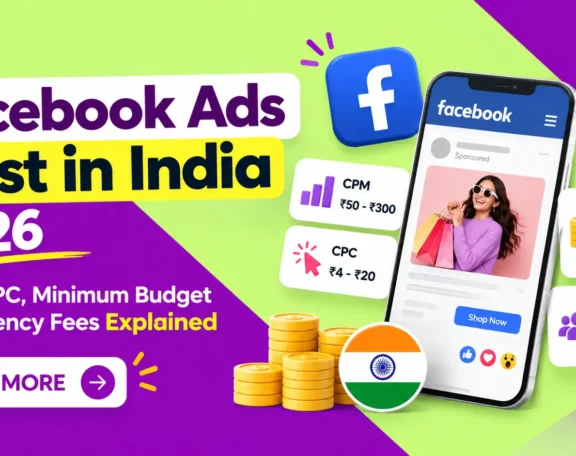
Cost metrics only matter against outcomes. Two campaigns with identical CPM and CPC can have wildly different profit if one lands on a slow, leaky checkout. Before you obsess over a ₹10 difference in CPM, look at your onsite conversion rate and average order value. Map your full funnel: impression to click, click to add‑to‑cart, cart to purchase, and then post‑purchase upsell or subscription. Fixing a cart‑to‑purchase drop often beats hunting for a 10% cheaper CPM. Work from the bottom of the funnel upwards when deciding what to optimise. For brands investing meaningfully in Meta, it can help to treat Instagram as part of a wider performance system that includes creator campaigns, Facebook placements and even CRO. The piece on Facebook ads cost in India pairs well with this article if you’re planning budgets across both platforms. As you grow, consider a quarterly review of your paid, creator and organic strategy against your broader influencer marketing approach. This keeps your media and content plans pointed at the same revenue targets instead of drifting apart.Why D2C Brands Choose Unikqo For Instagram-Focused Growth
The agency’s approach is built for founders who care about ROAS and unit economics more than vanity metrics. Typical influencer shops sell you on reach, then figure out creators and tracking later. Here, creator selection, media plans and reporting are wired together before the first brief goes out. The core difference is simple: every influencer and ad decision is driven by audience data and authenticity checks upfront, then tied to concrete business outcomes in a live dashboard you can open any day of the month. For Instagram in particular, that means the creator shortlist, UGC scripts and Meta ad structure are planned in one workflow so your instagram ads cost in india sits inside a full‑funnel P&L, not a separate “brand” budget. Highlights brands usually weigh up:- Creator discovery filtered by data using AI and audience authenticity tools instead of manual scrolling and guesswork.
- Performance‑first campaign design where UGC, whitelisting and paid Reels are planned as a single performance system.
- Transparent live reporting on clicks, engagement and ROI so your team can see how CPM, CPC and revenue move in real time.
- Industry‑specific strategy for Indian D2C and ecommerce brands, backed by account managers who run campaigns end to end.