
 18 August 2026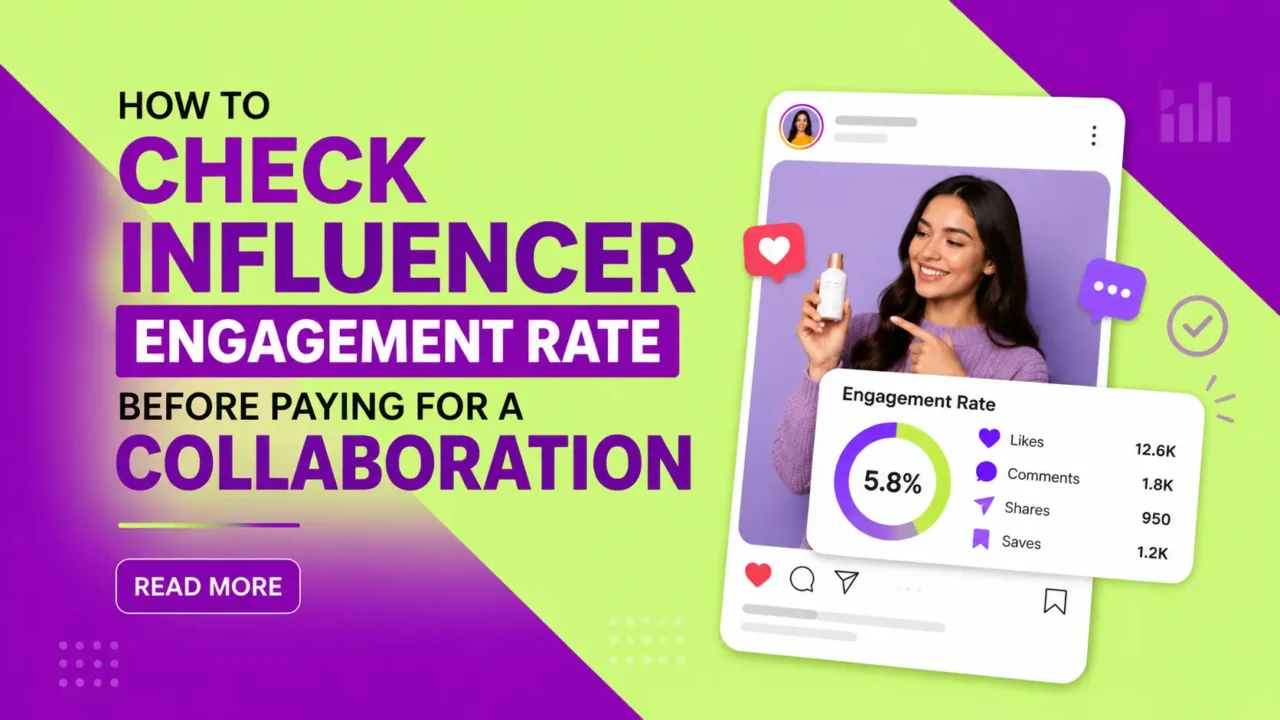
Table of Contents
If you are about to send a brief or PO to a creator, influencer engagement rate is the number you should be checking first, not last. Follower count looks impressive on screenshots, but engagement is what decides whether your campaign moves product or just generates pretty content.
Most Indian brands still eyeball likes and views, then trust a media kit. That is how budgets disappear into influencers with fake followers, disengaged audiences, or reach mostly outside your target city. The fix is simple: a repeatable way to calculate, compare, and question engagement before you pay.
What Influencer Engagement Rate Actually Tells You
Engagement rate tells you how many real people are reacting to an influencer’s content compared with how many see it. High numbers usually mean the creator has a loyal audience that listens, comments, and shares. Low numbers can signal fake followers, stale content, or a mismatch with their current audience. For campaigns in India, engagement is often a better predictor of sales than views alone, especially for D2C and ecommerce brands under pressure to show ROI. A niche creator with 25,000 followers and strong engagement can drive more checkouts than a celebrity who gets passive views but very few comments.How To Calculate Influencer Engagement Rate In Minutes
You do not need any fancy tool to start; you just need a clear method for how to calculate influencer engagement rate across the last few posts. Start with a specific platform, one metric, and a short date range, then make sure every creator is measured the same way.The Simple Engagement Rate Formula
The most common formula is: Engagement Rate = (Total Interactions ÷ Reach) × 100. Interactions usually mean likes, comments, shares, and saves. Reach is better than followers because it reflects how many people actually saw the post. If you cannot get reach data, use followers, but stay consistent across all influencers.Building A Quick Comparison Sheet
Open a spreadsheet, list each influencer in rows, and pull data from 6–10 recent sponsored and organic posts. For every post, log likes, comments, shares, saves, reach, and date. Then add a formula column to calculate the engagement rate for each post, and a simple average per creator so you can compare them like for like.Using An Influencer Engagement Rate Calculator
If your team is small or short on time, an online influencer engagement rate calculator can speed up the math, but do not stop there. Most calculators only look at followers and likes, so they miss fake engagement, bots, and audience quality. Use calculators as a first filter, then do your own manual checks on a smaller shortlist.Reading Instagram Influencer Engagement Rate The Right Way
Instagram looks simple from the outside, but its mix of Reels, Stories, carousels, and static posts means engagement is not one number. Many Indian creators have high Reel views from Explore, but those views do not always translate into profile visits, saves, or link clicks. You need to look at post types separately.Post Types You Should Compare
For Instagram influencer engagement rate, compare Reels, carousels, and Stories differently instead of averaging everything. Reels are good for reach and awareness, carousels often get higher saves and comments, and Stories drive swipes and replies. Judge each creator against the format you plan to use most in your campaign. Ask for screenshots or temporary access to their Insights, then check the last four to six Reels and the last week of Stories. Focus on reach, replies, profile visits, and link clicks where possible. If a creator refuses to share any screenshots, that is usually a signal to move on.Signs Of A Good Influencer Engagement Rate In India
A good influencer engagement rate depends on the niche, platform, and follower size. Micro creators often show higher percentages because their audience knows them well. Large creators usually have lower percentages, but can still work if the absolute number of comments and saves is high and the audience matches your buyer. As a rough guide, many Indian brands treat 2–3% as healthy for mid-size Instagram profiles, with 4–6% common in tight niches. The key is to compare influencers in the same category and follower band. Do not compare a beauty micro creator with a cricket meme page and expect the numbers to behave the same way.Red Flags When Engagement Looks Too Good
Some engagement patterns should make you slow down. Hundreds of generic comments like “Nice post” and fire emojis, arriving in clumps, often signal comment pods or bought engagement. Sudden spikes in followers without any viral content can also suggest paid followers that will never buy your product. Check the comment profiles: real mix of languages, profile photos, and posts is a good sign. Accounts with no profile picture, random usernames, and zero posts are usually bots. If this work feels heavy to do in-house, partner with an agency that has influencer engagement analysis built into their process.Going Beyond Rate: Analytics You Should Demand
Engagement is a strong filter, but it is not the full story. You also need influencer analytics India brands often skip: audience geography, age, language, and device type. If your sales are mostly in Tier 1 cities, but half the audience is overseas or in regions you do not ship to easily, the campaign will struggle even with a good rate.Audience And Content Fit Checks
Ask for audience breakdown screenshots and look closely at top cities, not just countries. Check that at least a meaningful chunk of the audience sits in your target market and age band. Then review their last month of content. If their recent posts are mostly unrelated to your category, their audience may not care about your offer. Some agencies, like Unkqo, run this work through their own campaign tools that check audience authenticity before shortlisting creators. That kind of pre-check saves brands from spending weeks in back-and-forth only to discover the audience does not match the brief.Tracking Beyond Likes During The Campaign
Before you sign, decide how you will track performance: discount codes, UTM links, custom landing pages, or whitelisted ads. An influencer engagement rate that looks healthy on paper must tie back to clicks, add-to-carts, and sign-ups. Ask for live dashboards or at least weekly reports that show traffic and conversions, not just reach.Building A Repeatable Shortlisting Process
Once you know how to calculate and question engagement, turn it into a checklist your team can run before every campaign. This helps you compare creators fairly, train new team members quickly, and push back when a creator’s manager only sells you follower count.A Simple Five-Step Engagement Checklist
- Step 1: Pull 6–10 recent posts and log likes, comments, shares, saves, and reach.
- Step 2: Calculate post-level and average engagement rate for each creator.
- Step 3: Scan comments for quality and real conversation.
- Step 4: Check audience geography and age against your buyer.
- Step 5: Review past brand collaborations and how their audiences reacted.
How Unkqo Approaches Engagement And Influencer Selection
Most agencies still start from who is available and cheap, then work backwards into the numbers. Unkqo flips that. Campaign planning begins with the business goal and audience, then moves into a data-led shortlist using its own discovery tool. Audience authenticity and engagement patterns are checked before a rupee is committed. The core advantage is simple: creator selection runs on audience data and authenticity checks first, then every live campaign is tracked against clicks, engagement, and ROI on a dashboard clients can see. Brands also get a dedicated account manager who handles the full flow from planning and creator outreach to Meta whitelisting, UGC production, and reporting. For Indian teams that do not have time to build deep influencer lists or run manual checks, this kind of structure keeps engagement questions on the table without slowing campaigns to a halt. If you are weighing agencies, ask each one to walk you through their shortlisting and tracking steps in this level of detail.Why Brands Choose Unikqo For Data-Led Influencer Engagement
Unikqo runs influencer campaigns the way performance marketers run ads: clear goals, verified data, and live numbers instead of gut feel. Where many agencies lead with creator moodboards and rate cards, Unikqo starts with your business target and then uses its own AI-powered discovery tool to shortlist creators whose audience and influencer engagement rate match that target. The single clearest USP is that creator selection is driven by audience data and authenticity checks before a rupee is spent, with every campaign tracked to business outcomes on a live dashboard clients can see. In practice, that means four things brands usually notice quickly:- Data-first shortlisting: AI-powered discovery plus audience insight checks on geography, authenticity, and past engagement patterns before outreach.
- Verified creators only: No guessing from media kits; Unikqo’s campaign tool filters out suspicious profiles early.
- Performance mindset: Influencer content and Meta performance (UGC ads, whitelisting) are planned together so strong posts keep working beyond organic reach.
- Hands-on management: A dedicated account manager handles the flow from campaign planning to reporting, so your team sees clean numbers instead of raw screenshots.