
 20 August 2026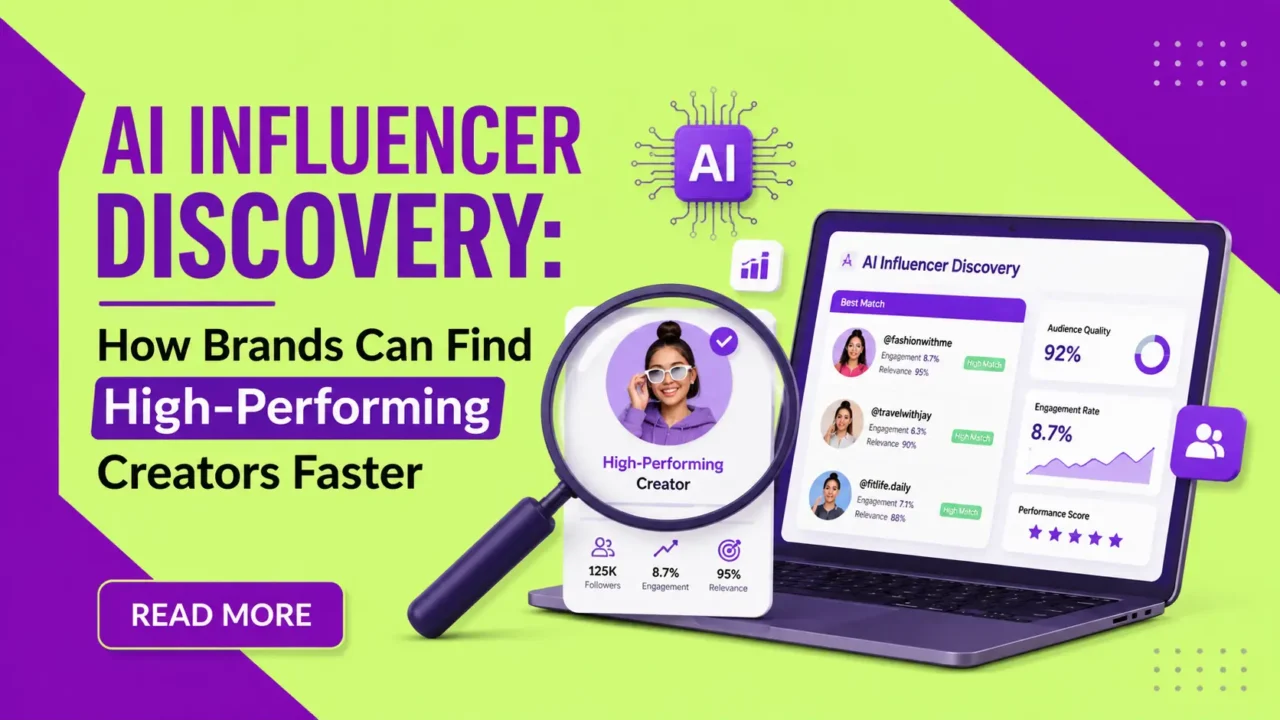
Table of Contents
Finding the right creators is the hardest part of influencer marketing, which is exactly where an influencer discovery platform should be doing the heavy lifting for your team. But most brand managers in India still spend nights inside Instagram search, Excel sheets, and screenshots from agencies.
If that sounds familiar, the problem usually isn’t a lack of options. It’s that you’re drowning in profiles and still not confident about who can actually move the needle. Let’s fix that by looking at how to run influencer discovery like a performance channel, not a guessing game.
Why Influencer Discovery Feels Slow And Hit-Or-Miss
Most marketing teams start influencer discovery with a vague brief: “Find 50 beauty bloggers on Instagram” or “We need 10 finance creators on YouTube this month.” That’s how you end up with a list that looks big on paper but thin on real impact. The first mistake is searching by follower count instead of business outcome. If you’re trying to drive installs or orders, you need creators with the right audience, format, and intent, not just a big number next to their handle from any influencer search platform. The second mistake is leaving discovery to juniors who don’t have the context on CAC targets, payback period, or brand positioning. They over-index on aesthetics and under-index on audience quality, which quietly kills campaign performance. The third mistake is treating creator research as a one-off project each time, instead of building a reusable, searchable database that gets sharper with every campaign.Setting Up Your Influencer Discovery Brief The Right Way
If your brief is fuzzy, every tool, spreadsheet, and agency output will be fuzzy. The fastest campaigns I’ve seen start with a one-page discovery brief that’s painfully specific about the target audience and business goal. Start by locking four things: geography, language, objective, and conversion event. For an ecommerce brand shipping across India, that might mean tier-1 and tier-2 metros, Hindi plus English, a focus on first-time orders, and “completed order” as the outcome you’ll track. From there, define non‑negotiables for your shortlist: minimum engagement quality, content style that matches your category, and clear disqualifiers such as excessive brand clutter on the feed or repeated controversial posts picked up by any serious creator discovery platform. Once this is written down, share the same brief with your internal team, agency, and freelancers. Consistency here saves you days of back-and-forth later.What A Good Influencer Discovery Platform Should Actually Do
Most tools promise reach and impressions, but they rarely talk about the boring parts that decide if campaigns work: data depth, filters, and integrations. That’s what you should judge first before paying for any influencer discovery tools. At a basic level, the platform should let you filter by country, city, language, category, follower band, and engagement, then quickly show you creator-level stats in one view. Anything that forces you to open 50 tabs is slowing the team. For Indian brands, it really helps if an influencer finder tool supports local nuances like regional language content, tier-2 and tier-3 city breakdowns, and audience location split by country and state, not just “India” as a single blob. If you run performance campaigns, check for integrations with your analytics stack so you can marry link clicks, sales or installs back to specific creators instead of staring at vanity metrics.Key Filters To Use On Day One
Most marketers underuse filters and end up with bloated shortlists. Start lean. Pick one primary category, one follower range, and maybe two secondary filters such as gender and main language on your chosen influencer discovery platform India vendors. Then add audience quality filters: suspicious follower spikes, low comment authenticity, and poor historical engagement. You don’t need perfect data, just enough signals to weed out the obvious bad fits before you talk to them.How To Judge Creator Quality Beyond Follower Count
Assume follower numbers are inflated until proven otherwise. This mindset alone will save you from a lot of wasted spend, even if you’re working without any influencer discovery platform support for a small pilot. Look for four signals: consistent views relative to follower count, comments that sound like real humans, content that regularly sells something for any brand, and a clear niche. Generalist creators usually deliver soft engagement but weak intent. On the audience side, pay attention to top countries, top cities, age and gender split, and the ratio of followers to following. Big gaps or odd geographies are red flags that no smart creator discovery platform should ignore. Finally, scroll their last 30–40 posts manually. You’ll spot brand clutter, repeated discount codes, and content that doesn’t match your price point long before any data score flags it.Red Flags That Signal “Skip This Creator”
If the comments are full of generic emojis, “cute” and “wow” from the same names, walk away. That’s a classic sign of low-intent audiences that burn budget on any influencer search platform India teams use. Be careful with creators who post daily brand integrations but rarely talk about what they actually use. Your product will vanish into that noise, and your team will struggle to attribute any lift to their content later.Building A Repeatable Creator Shortlisting Workflow
The most effective influencer teams treat discovery like sales prospecting. They run a steady pipeline instead of scrambling before every launch and trying a new influencer finder tool each time something slips. A simple weekly workflow can look like this: top-of-funnel research to add new names, mid-funnel validation checks, and bottom-funnel outreach plus negotiation. Each stage has its own owner, timeline, and clear checklists. Store every evaluated profile in a single place with tags: category, campaign fit, performance verdict, and notes on pricing. Over two or three quarters, this turns into your internal creator CRM, not just a pile of past campaigns. Agencies that run influencer marketing platform India stacks well will already have this structure. Ask them to walk you through how they tag, rate, and re-use creators across brands before you sign retainers.How Agencies Use Data To De-Risk Shortlists
Good agencies will run your initial list through third‑party tools to check audience authenticity, historical sponsored post performance, and engagement quality. That’s more reliable than picking names from a static creator discovery platform list. Teams like Unkqo, for example, plug these checks into their own campaign tool so weak profiles are filtered out before the client ever sees a deck, rather than getting cut at the very last minute.From Influencer Discovery To Measurable Business Results
Discovery is only half the battle. If you can’t tie creators back to revenue or at least a down‑funnel metric, it’s just nice content. This is where an influencer search platform with tracking baked in starts to matter. Set up clear tracking before any content goes live: coupon codes, unique links, whitelisted ads, and UTMs mapped to each creator. Once that’s running, you’ll quickly see which profiles deserve repeat budgets. For brands that rely heavily on Meta ads, combining creator content with whitelisted campaigns works far better than keeping organic posts and paid media apart, especially when paired with a performance-focused influencer marketing platform India partners offer. Over a couple of campaign cycles, you’ll notice a core pool of creators that reliably hit your benchmarks. That’s the group to nurture with better briefs, early samples, and long‑term deals.Common Measurement Mistakes To Avoid
One recurring mistake is judging creators on CPM and impressions alone. Those metrics flatter big names but hide how little real action they drive, something any decent influencer discovery tools suite can show if you connect it properly. Another is mixing objectives in a single campaign: some creators asked to drive reach, others to drive sales, all measured on the same report. Separate those goals so you don’t drop effective sellers because their views looked smaller.Why Unkqo Works Differently From Typical Influencer Agencies
Most influencer agencies in India still work off manual lists and one-off reports. Unkqo, based in New Delhi, builds campaigns around its own tool that runs through a four‑step flow: plan the campaign, build a shortlist, check audience insights plus authenticity, then confirm the final creators. Their sharpest distinction is that creator selection happens on audience and authenticity data before a rupee is committed, and every campaign is tracked to business outcomes on a live dashboard clients can see. That’s a different mindset from “we’ll share a PPT after the posts go live.”- AI‑assisted discovery: Helps find relevant creators on Instagram, YouTube and TikTok without starting from scratch each time.
- Verified creators only: Filters out suspicious profiles instead of pushing them into decks to inflate numbers.
- Performance focus: Treats creator work and Meta paid campaigns as one performance engine, not two disconnected budgets.
- Account management: Dedicated managers run campaigns end to end, from briefing and content approvals to reporting.
Why Brands Choose Unikqo For AI-Led Influencer Discovery
Unikqo works differently from a typical influencer agency because every creator decision is pushed through its own AI‑powered campaign tool before money leaves your account. The core promise is simple: creator selection runs on audience data and authenticity checks before a rupee is spent, and every campaign is tracked to a business outcome on a live dashboard you can see. For brands that treat creators as a performance channel, that structure matters more than a flashy deck. Unikqo combines AI‑assisted influencer discovery across Instagram, YouTube and TikTok with verified‑only creators, then links those choices to Meta performance campaigns using UGC ads and whitelisting so discovery and paid media pull in the same direction.- AI‑powered discovery: Shortlists built from data, not guesswork or recycled spreadsheets.
- Verified creators only: Suspicious profiles are filtered out early instead of sneaking into reports.
- ROI‑focused approach: Campaigns planned around specific goals for D2C, ecommerce, SaaS and startups.
- Transparent tracking: Live dashboards showing clicks, engagement and ROI at creator level.
- End‑to‑end management: Dedicated managers handle briefs, content, approvals and optimisation.