
 24 August 2026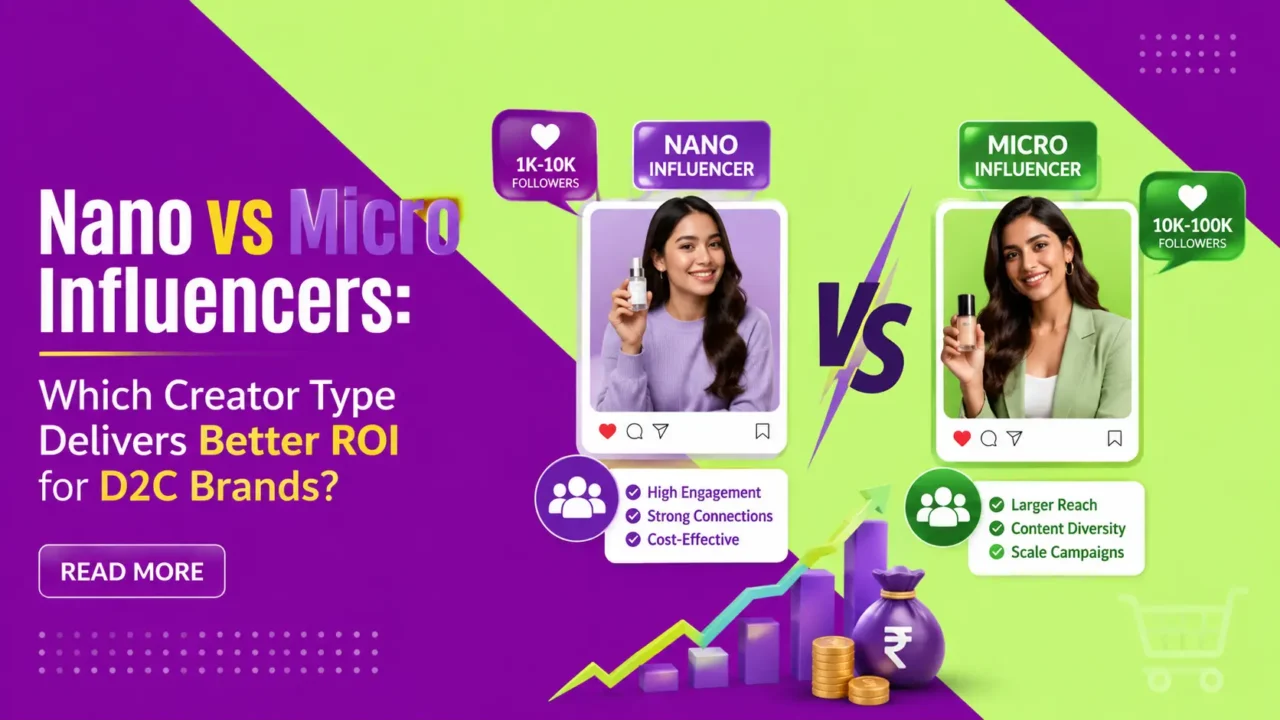
Table of Contents
Most D2C founders in India hit the same wall: you know influencer marketing works in your category, but you’re stuck on one question – nano vs micro influencers, which actually moves the needle on revenue without wrecking your CAC?
You’re not alone. I see brands wasting lakhs spreading thin across random creators or chasing one viral post that never lands. The real unlock is picking the right creator tier for your stage, margins, and goals, then building a simple, repeatable system around it.
What Do Nano And Micro Influencers Really Offer D2C Brands?
Nano influencers usually sit in the 1,000–10,000 follower range, while small influencers in the micro bracket hover around 10,000–100,000. The follower band matters far less than how tight their audience is and how much real trust they’ve built with people who actually buy. Across D2C influencer marketing projects, I see the same pattern: nano creators feel like the friendly expert you know from your housing society, while micro creators feel like the go-to recommendation voice for a niche. One is intimacy, the other is scaled trust. On the brand side, you’re balancing three things: content quality, audience relevance, and cost per meaningful action. Once you stop obsessing over reach screenshots and start tracking revenue, some clear differences show up.Key Differences: Nano Vs Micro Influencers On ROI Signals
The simplest way to think about nano vs micro influencers for ROI is: nanos usually win on engagement rate and comment quality, micros usually win on volume and predictability. Your job is to match that profile to the right kind of campaign. Nano influencers often sit closer to their followers; replies feel like conversations, not broadcasts. That intimacy is gold when you need behaviour change: switching shampoos, trying a new functional beverage, or convincing someone to share UGC for a referral drive. In micro influencer marketing, you typically see a more polished content style and more consistent views per post. That matters for launches, big sale moments, or when you’re testing messaging at some scale before pouring performance spend behind high-performing creatives.Engagement And Comment Quality
On most campaigns, nano influencers pull stronger engagement rates, but the real story sits in the comments. With nanos, you get buyers asking detailed questions about price, ingredients, or shipping. Those threads are market research you don’t have to pay an agency for. Micro creators, on the other hand, generate more total comments across a flight, which helps social proof. The trade-off is more shallow reactions and fewer in-depth product questions. Both have value; just don’t confuse noisy likes with intent.Audience Fit And Buying Power
Audience fit beats follower count every single time. I’ve seen a nano creator in a Tier-2 parenting group drive more sales of a baby care SKU than a large lifestyle page. Influencer engagement only converts when the creator’s followers actually match your customer profiles. Micro creators usually have more diverse audiences across cities and age groups. For D2C brands ready to expand beyond metro-heavy buyers, micros can accelerate discovery. The trick is checking buyer overlap, not just city split and gender.Cost, Pricing, And How Many Creators You Actually Need
Let’s talk money because that’s where most influencer campaign strategy discussions get fuzzy. Nanos are cheaper per creator, but you need more coordination. Micros cost more per post, but you deal with fewer people and often stronger production quality. For early-stage brands under pressure on influencer ROI, a good starting approach is a 70:30 nano-to-micro mix for a three-month period. That lets you test messages cheaply with nanos, then double down with a smaller group of micros once you know what lands.Typical Pricing Patterns In India
Influencer pricing in India moves a lot by category and city, but patterns hold. Nanos often work on barter plus a small fee or pure barter when the product feels aspirational. Micros expect clear fee structures, usage rights spelled out, and some predictability on future work. The hidden cost with nanos is coordination: contracts, briefs, tracking links, and chasing timelines. With micros, the visible cost is higher, but logistics are simpler because you’re dealing with more professional setups or managers.How Many Creators Per Campaign?
For awareness pushes, 10–20 nano influencers can give you that sense of “this brand is suddenly everywhere” in tight communities. For conversion-focused bursts, a smaller squad of 5–8 micros can outperform a huge long-tail effort simply because they drive clearer action. Don’t copy another brand’s creator counts blindly. Match your average order value, current repeat rate, and margins to how much you can pay per first purchase without breaking unit economics.Choosing The Right Mix For Your Brand Stage
Early D2C brands with limited budgets usually get more learning from a nano-heavy plan. You’re still figuring out positioning, and you want fast feedback on offers, packaging, and objections. Nano influencers will surface that in comments and DMs quickly. Once your messaging and product-market fit are stable, leaning harder into micro creators tends to make sense. At this point, your creator marketing should support predictable new-customer acquisition, not constant experimentation on basic questions like “who is this product for?”Match Creator Type To Campaign Objective
For content bank building, both tiers help, but micros usually provide more consistently on-brand visuals. For referral or community-led pushes, nanos shine because they feel like peers. Think of it as depth with nanos and breadth with micros, and budget accordingly. If your primary goal is to reduce paid ads dependency, you’ll want micro creators whose content keeps delivering via paid whitelisting. That’s where consistent camera, lighting, and storytelling skills start paying extra dividends.How To Measure ROI Beyond Coupon Redemptions
Too many D2C brands in India judge influencer ROI on a single line: coupon code usage in seven days. That’s a narrow view. Influencer content often acts like a recommendation your buyer sees multiple times before finally checking out in a performance ad funnel. For cleaner measurement, set up 3–4 success metrics upfront: assisted revenue, cost per added email or WhatsApp opt-in, cost per UGC asset, and shift in branded search. Then map which hit came from nano creators and which from micros.Creative Reuse And Content Lifespan
The biggest hidden benefit of micro influencer marketing is the reuse potential. Strong micro creator videos can become winning ads, landing page explainers, or CRM content. Suddenly that “expensive” post fee doesn’t look so high across three or four channels. Nano content can feel more raw, which plays well in Stories, WhatsApp broadcasts, or closed community drops. Just be clear in your contracts who owns what rights and for how long, or you’ll run into headaches when a video performs well.Common Mistakes D2C Brands Make With Small Creators
The most expensive mistake is running one-off bursts with no system. You test 30 creators once, forget to tag and track properly, and end up none the wiser. You’ve paid for a campaign and learned nothing reusable for the next quarter. Another frequent issue is misaligned briefs: forcing scripted lines, rigid product shots, and deadlines that ignore how creators actually work. That kills authenticity and influencer engagement, especially with audiences used to casual, story-first content. A simple fix is to rank creators on three axes: audience fit, creative style, and responsiveness. Then favour those who are easy to work with for recurring collaborations. Long-term relationships nearly always beat one-off posts, both in pricing and performance.Why Unikqo Works Differently For Nano And Micro Creator Campaigns
Most agencies still start with a follower bracket and a rate card. Unikqo turns that around and starts with your commercial goal: lower CAC, higher repeat purchase, or deeper category education. Creator shortlists are then built from audience data, not vanity metrics. The clearest USP is simple: Unikqo cares more about the mix of nano and micro creators that hits your business targets than about selling you the biggest names they know. That means a campaign for a haircare brand will look very different from a campaign for fitness snacks.- Creator selection is driven by audience overlap and past performance, not just reach.
- Campaigns are scoped around trackable outcomes, then reported against them, not just impressions.
- Pricing is transparent, with creator fees separated cleanly from Unikqo’s own charges.
- Reports highlight what underperformed and how the next flight will adjust mix and messaging.