
 20 July 2026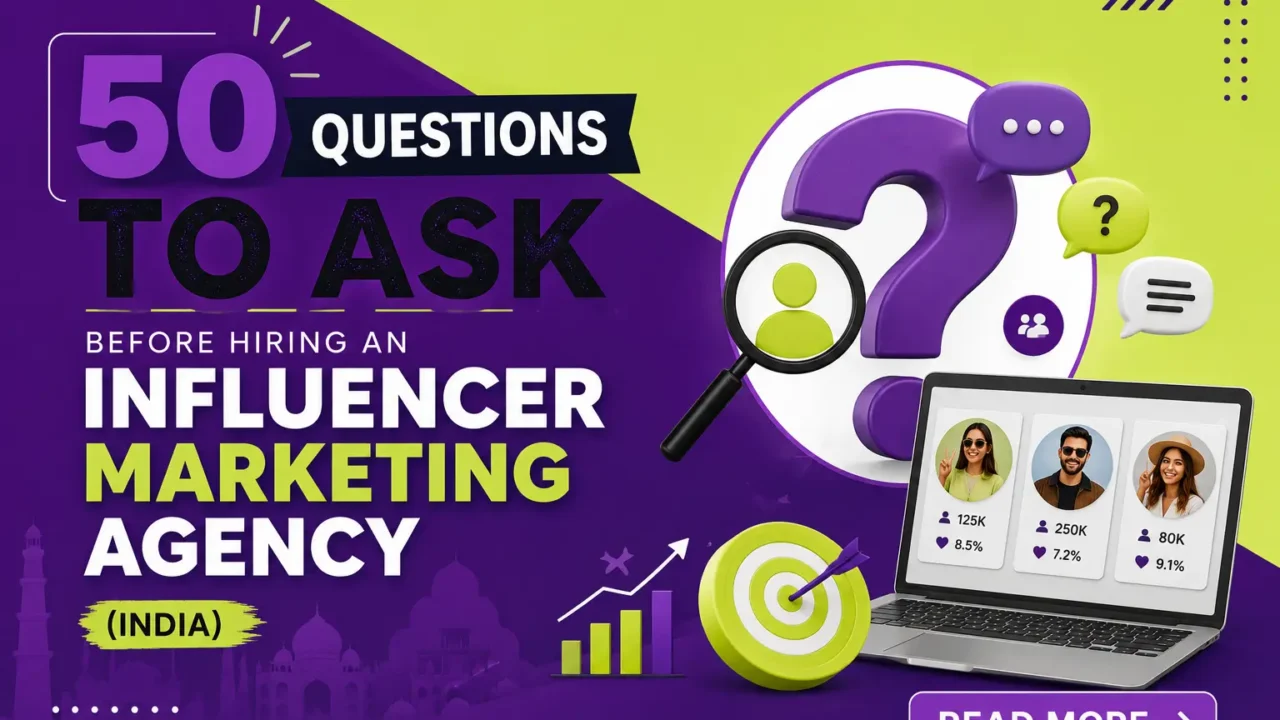
Table of Contents
Introduction
Choosing the right influencer marketing agency can determine whether your campaign delivers meaningful business growth or simply consumes your budget. With thousands of creators and hundreds of agencies operating in India, businesses often struggle to identify the right partner.
This influencer marketing agency checklist has been created for startups, D2C brands, ecommerce companies, real estate businesses, healthcare brands and growing enterprises that want measurable results. The questions below help evaluate expertise, transparency, campaign management, creator quality, reporting and return on investment.
Instead of selecting an agency based only on follower counts or attractive presentations, use these questions to compare agencies objectively and choose a long-term growth partner.
50 Questions to Ask Before Hiring an Influencer Marketing Agency
1. How Do I Choose the Best Influencer Marketing Agency in India?
Choosing the right influencer marketing agency is one of the most important decisions for any brand planning to invest in creator collaborations. A reliable agency should understand your business goals, target audience, budget, and industry before recommending influencers. Instead of selecting an agency based on promises or follower counts, evaluate its experience, campaign strategy, reporting process, and previous success stories.
A professional influencer marketing agency should have access to verified creators across different industries and social media platforms. Ask how they shortlist influencers, track campaign performance, and measure business outcomes. Transparency in pricing, communication, and reporting is equally important.
If your goal is long-term growth, choose an agency that focuses on building authentic creator partnerships rather than one-time promotions. The best influencer marketing agency in India will always prioritize audience relevance, content quality, and measurable campaign performance over vanity metrics.
2. What Should I Look for Before Hiring an Influencer Marketing Agency?
Before hiring an influencer marketing agency, prepare a checklist that helps you compare different agencies objectively. Start by reviewing their portfolio, client testimonials, campaign results, and industries they have worked with. Ask whether they specialize in nano, micro, macro, or celebrity influencers.
A trustworthy agency should explain how they identify creators, verify engagement, negotiate pricing, and manage campaign timelines. Reporting is another key factor. Ensure the agency provides regular updates, campaign insights, and performance metrics instead of basic screenshots.
Also, discuss ownership of content, influencer contracts, revision policies, and post-campaign support. These details help avoid misunderstandings later. The more transparent an agency is during the initial discussions, the more likely it is to become a reliable long-term marketing partner.
3. Which Influencer Marketing Agency Is Best for Startups?
Startups often have limited marketing budgets, making it essential to work with an agency that understands cost-effective campaign planning. Instead of focusing on expensive celebrity collaborations, the right influencer marketing agency for startups should recommend nano and micro influencers who have highly engaged communities.
The agency should also help define campaign goals, whether it’s increasing brand awareness, generating website traffic, or driving product sales. Look for agencies that offer flexible pricing, transparent reporting, and scalable campaign strategies as your business grows.
A startup-friendly agency doesn’t simply connect brands with influencers—it acts as a strategic partner by helping you maximize every marketing investment. Campaign planning, creator selection, and performance tracking should all align with your business objectives to achieve sustainable growth.
4. How Much Does an Influencer Marketing Agency Charge in India?
The cost of hiring an influencer marketing agency in India depends on several factors, including campaign size, influencer category, industry, content format, and campaign duration. Agencies may charge a management fee, creator fee, or a combination of both.
Nano influencers are generally more affordable, while macro creators and celebrities require significantly higher budgets. Additional costs may include content production, product shipping, paid promotions, and campaign reporting.
Instead of choosing the lowest-priced agency, focus on the value it delivers. A well-managed campaign with relevant creators often produces better results than a large campaign with poor audience targeting. Before signing any agreement, ask for a detailed pricing breakdown to understand exactly what services are included and whether there are any additional charges.
5. Is Hiring an Influencer Marketing Agency Worth It?
For businesses looking to expand their online presence and build trust with potential customers, hiring an influencer marketing agency can be a valuable investment. Experienced agencies simplify the entire campaign process, from creator discovery and outreach to content approvals, reporting, and performance analysis.
Managing influencer campaigns independently can be time-consuming, especially when working with multiple creators. Agencies streamline communication, negotiate pricing, monitor campaign execution, and ensure deadlines are met efficiently.
The biggest advantage is access to industry expertise and a network of verified influencers. A well-planned influencer campaign can increase brand awareness, generate quality traffic, improve engagement, and support business growth. The key is choosing an agency that focuses on meaningful partnerships, transparent reporting, and measurable results rather than simply delivering sponsored posts.
6. How Do Influencer Marketing Agencies Find Creators?
Finding the right creators is much more than searching hashtags on Instagram. A professional influencer marketing agency follows a structured influencer discovery process to identify creators who match a brand’s industry, audience, campaign goals, and budget. Instead of focusing only on follower count, agencies evaluate audience demographics, engagement quality, content style, brand collaborations, and overall authenticity.
Most agencies build creator databases over time and continuously verify influencer profiles before recommending them to clients. They also analyze factors such as audience location, niche relevance, posting consistency, and content quality to ensure the collaboration delivers meaningful results.
A reliable creator management agency in India should explain how creators are shortlisted and why they are suitable for your campaign. Brands should also ask whether influencer profiles are manually reviewed before campaign approval. Choosing relevant creators improves campaign performance, builds trust with the target audience, and helps brands achieve long-term marketing objectives instead of short-term visibility.
7. How Can I Verify if an Influencer Has Fake Followers?
One of the biggest challenges in influencer marketing is identifying creators with fake followers or artificially inflated engagement. Before working with any influencer, brands should review engagement patterns, audience quality, comment authenticity, and posting consistency.
An influencer with hundreds of thousands of followers but very few genuine comments or interactions may not provide real value for your campaign. Authentic creators usually have meaningful conversations with their audience, consistent engagement across posts, and content that attracts relevant viewers.
Experienced influencer marketing agencies verify creator profiles before recommending them to clients. They review audience demographics, engagement history, previous collaborations, and overall account credibility to reduce campaign risks.
Asking your agency about its influencer verification process is an important step before launching any campaign. Partnering with authentic creators helps improve brand trust, campaign performance, and return on marketing investment.
8. What Is a Good Influencer Engagement Rate?
Engagement rate is one of the most important metrics used to evaluate influencer performance. It measures how actively an audience interacts with content through likes, comments, shares, saves, and other meaningful actions. A creator with fewer followers but higher engagement often delivers better campaign results than someone with a much larger audience but limited interaction.
Instead of selecting influencers based only on follower count, brands should compare engagement rate, audience quality, and content relevance. Different industries and social platforms may have different engagement benchmarks, so performance should always be evaluated within the creator’s niche.
Professional influencer marketing agencies monitor engagement trends before recommending creators. They also compare previous campaign performance to identify influencers who consistently generate authentic audience interaction. Strong engagement generally indicates that followers trust the creator and are more likely to respond positively to brand recommendations.
9. Should I Hire Nano or Micro Influencers?
Choosing between nano and micro influencers depends on your campaign objectives, target audience, and marketing budget. Nano influencers usually have smaller but highly engaged communities, making them an excellent choice for startups, local businesses, and niche brands looking to build trust.
Micro influencers generally have a broader audience while maintaining strong engagement and credibility. They are suitable for brands aiming to increase awareness, generate website traffic, or promote product launches on a larger scale.
Instead of selecting creators based only on audience size, evaluate relevance, engagement, content quality, and audience demographics. Many successful campaigns combine nano and micro influencers to maximize reach while maintaining authenticity.
An experienced influencer marketing agency can recommend the right creator mix based on your campaign goals, ensuring your investment reaches the most relevant audience and delivers measurable business outcomes.
10. Which Social Media Platform Is Best for Influencer Marketing?
There is no single platform that works for every business. The best social media platform for influencer marketing depends on your industry, target audience, campaign objectives, and content format.
Instagram is ideal for fashion, beauty, lifestyle, food, travel, and ecommerce brands because of its visual content and high engagement. YouTube works well for detailed product reviews, tutorials, technology, education, and long-form storytelling. LinkedIn is highly effective for B2B companies, professional services, SaaS businesses, and corporate branding. Facebook can still deliver value for local businesses and community-focused campaigns.
Before selecting a platform, identify where your target customers spend the most time. A reliable influencer marketing agency evaluates audience behavior, campaign goals, and content strategy before recommending the most suitable platform. Choosing the right platform ensures better engagement, stronger brand visibility, and higher campaign performance.
11. How Do Agencies Select Influencers for Brands?
Selecting influencers is not just about finding creators with large followings. A professional influencer marketing agency follows a structured influencer selection process that focuses on audience relevance, engagement quality, content style, industry expertise, and campaign objectives. The goal is to identify creators whose audience closely matches the brand’s target customers.
Agencies also evaluate previous brand collaborations, posting consistency, audience demographics, and content authenticity before recommending influencers. This reduces the risk of investing in creators who may not deliver meaningful engagement or conversions.
Before approving any creator, brands should ask the agency to explain why each influencer has been shortlisted. A transparent selection process ensures that every collaboration contributes to measurable business outcomes rather than simply increasing social media visibility.
12. How Do Influencer Marketing Campaigns Work?
An influencer marketing campaign typically begins with defining clear business goals, such as increasing brand awareness, generating website traffic, promoting a product launch, or driving sales. Once the objectives are finalized, the agency identifies suitable influencers based on audience demographics, niche, engagement, and budget.
After influencer selection, campaign briefs, content guidelines, timelines, and deliverables are shared with creators. Brands usually review and approve the content before it goes live. During the campaign, agencies monitor performance, track engagement, and ensure creators meet the agreed deliverables.
Once the campaign ends, a detailed performance report is prepared to evaluate reach, engagement, clicks, conversions, and overall campaign effectiveness. This structured process helps brands make informed decisions for future campaigns.
13. How Long Does an Influencer Campaign Take?
The duration of an influencer marketing campaign depends on the campaign objective, number of creators involved, content requirements, and approval process. Small campaigns with a few nano influencers can often be completed within two to three weeks, while large multi-platform campaigns may require one to three months.
Campaign planning includes influencer research, creator outreach, contract approvals, product delivery, content creation, revisions, publishing, and reporting. Each stage requires proper coordination to ensure smooth execution.
Instead of rushing campaigns, brands should focus on quality planning and realistic timelines. A well-organized campaign allows creators to produce authentic content while giving the agency enough time to optimize campaign performance and deliver measurable results.
14. What KPIs Should I Track in Influencer Marketing?
Tracking the right performance indicators is essential for measuring campaign success. The most commonly used influencer marketing KPIs include reach, impressions, engagement rate, clicks, website traffic, conversions, content shares, saves, and audience growth.
The ideal KPIs depend on your campaign objective. If your goal is brand awareness, reach and impressions become more important. If you want sales or leads, website traffic, conversion rate, and return on investment should receive greater attention.
A reliable influencer marketing agency should provide detailed campaign reports that explain not only the numbers but also the insights behind them. Monitoring the right KPIs helps brands understand what worked, what can be improved, and how future campaigns can deliver even better performance.
15. How Do Agencies Measure Influencer Marketing ROI?
Measuring return on investment is one of the most important aspects of influencer marketing. Agencies evaluate campaign performance by comparing marketing investment with the business results achieved. Depending on campaign goals, ROI may include website visits, product sales, lead generation, engagement, or customer acquisition.
Tracking links, promotional codes, landing pages, and campaign-specific analytics help agencies identify which creators contributed the most value. Instead of relying only on likes or follower growth, successful agencies measure actual business impact.
Brands should always ask how campaign performance will be tracked before the campaign begins. A clear reporting process ensures transparency and helps determine whether the investment delivered meaningful results.
16. What Questions Should I Ask an Influencer Agency?
Before hiring an influencer marketing agency, prepare a detailed checklist that covers every stage of campaign execution. Ask how influencers are selected, how campaigns are managed, what reporting methods are used, and how performance is measured.
You should also discuss pricing, contract terms, revision policies, content ownership, campaign timelines, and post-campaign support. A transparent agency will answer these questions confidently and provide examples from previous campaigns.
Asking the right questions helps brands compare agencies objectively and reduces the risk of choosing the wrong marketing partner.
17. Should Agencies Provide Campaign Reports?
Yes. Campaign reporting is one of the most valuable services offered by a professional influencer marketing agency. A detailed report helps brands understand campaign reach, engagement, audience response, website traffic, and overall business impact.
Instead of sending screenshots, agencies should provide structured reports with actionable insights and performance summaries. Reports should explain which creators performed well, which content generated the highest engagement, and where future campaigns can be improved.
Transparent reporting enables brands to evaluate campaign effectiveness and make informed marketing decisions.
18. Can Influencer Agencies Guarantee Sales?
No ethical influencer marketing agency can guarantee a specific number of sales. Campaign performance depends on several factors, including product quality, pricing, audience relevance, creator credibility, campaign timing, and market competition.
A professional agency focuses on maximizing campaign performance by selecting suitable creators, developing an effective content strategy, and monitoring campaign results. While sales may increase, no agency can promise guaranteed outcomes.
Brands should be cautious of agencies making unrealistic claims. Instead, choose agencies that emphasize strategy, transparency, and measurable performance indicators.
19. What Industries Benefit from Influencer Marketing?
Influencer marketing is effective across multiple industries, including fashion, beauty, ecommerce, healthcare, real estate, technology, education, finance, travel, food, fitness, and hospitality. The key to success lies in choosing creators whose audience aligns with your target market.
Different industries require different campaign strategies. For example, product demonstrations work well for technology brands, while lifestyle content performs strongly for fashion and beauty businesses.
A specialized influencer marketing agency understands these differences and recommends creators based on industry-specific goals and audience behavior.
20. Can Influencer Marketing Help Local Businesses?
Yes. Local influencer marketing is one of the most effective ways for small businesses to reach nearby customers. Collaborating with creators who have a strong local audience helps businesses increase brand awareness, promote events, attract store visits, and generate community engagement.
Restaurants, gyms, salons, healthcare clinics, educational institutes, and retail stores often benefit from working with regional creators who have built trust within their local communities.
Instead of investing in national campaigns, local businesses can achieve better results by partnering with influencers who understand the preferences of their audience. This targeted approach improves campaign relevance and delivers higher engagement within the desired location.
21. Can Influencer Marketing Increase Website Traffic?
Yes, influencer marketing can significantly increase website traffic when campaigns are planned with clear objectives and the right creators. Influencers encourage their audience to visit your website through product recommendations, reviews, tutorials, and exclusive offers. However, success depends on choosing creators whose audience matches your target customers.
A professional influencer marketing agency focuses on more than just social media engagement. It develops campaigns that include strong calls-to-action, landing pages, trackable links, and compelling content that motivates users to explore your website.
Instead of measuring only likes and comments, brands should monitor website sessions, click-through rates, time on site, and conversions. A well-executed influencer campaign not only attracts visitors but also improves brand credibility and generates qualified traffic that is more likely to convert into customers.
22. What Makes a Good Creator Management Agency?
A creator management agency plays an important role in building successful relationships between brands and influencers. A good agency does much more than connect creators with businesses. It manages communication, campaign planning, negotiations, contracts, content approvals, performance tracking, and long-term partnerships.
When evaluating a creator management agency in India, look for transparency, industry experience, verified creator networks, and a structured campaign management process. The agency should understand your brand goals and recommend creators who genuinely align with your audience.
Strong creator relationships often result in more authentic content, better engagement, and higher campaign performance. Choosing an agency that focuses on quality partnerships instead of one-time promotions can help brands achieve sustainable marketing success.
23. How Many Influencers Should a Brand Hire?
There is no fixed number of influencers that every brand should hire. The ideal number depends on your campaign objective, budget, target audience, and industry. Small businesses often achieve excellent results by collaborating with a group of nano and micro influencers, while larger brands may combine creators from different audience sizes.
Instead of selecting one influencer with a massive following, many brands distribute their budget across multiple creators. This approach increases reach, improves audience targeting, and reduces campaign risk.
An experienced influencer marketing agency can recommend the right combination of creators based on your campaign goals. The focus should always be on audience relevance, engagement quality, and campaign performance rather than simply increasing the number of influencers.
24. Should Brands Sign Influencer Contracts?
Yes. Every influencer collaboration should be supported by a clear contract that protects both the brand and the creator. An influencer contract defines campaign expectations, deliverables, content deadlines, payment terms, content ownership, revision policies, and disclosure requirements.
A written agreement helps prevent misunderstandings and ensures that everyone involved understands their responsibilities. It also provides clarity if changes are required during the campaign.
Professional influencer marketing agencies manage contracts on behalf of brands and ensure that all campaign terms are documented before work begins. A well-prepared contract builds trust, improves campaign efficiency, and reduces potential disputes.
25. Who Owns Influencer Campaign Content?
Content ownership is an important topic that brands should discuss before launching any influencer campaign. In many cases, creators own the original content unless the agreement specifies otherwise. If a brand wants to reuse videos or images for advertisements, websites, or future promotions, these rights should be clearly mentioned in the contract.
Usage rights may vary depending on campaign requirements and compensation. Some collaborations allow limited use, while others provide full commercial rights for a specific period.
Discussing content ownership in advance helps avoid legal complications and ensures that both the brand and the creator understand how the content can be used after the campaign ends.
26. Can Influencer Content Be Used in Ads?
Yes, influencer-generated content can be used in digital advertising, but only if the necessary usage rights have been agreed upon in advance. Many brands repurpose creator content for Meta Ads, Google Display campaigns, landing pages, email marketing, and website banners because authentic content often performs well with potential customers.
Before using influencer content in paid advertising, ensure that the agreement clearly defines the duration, platforms, and scope of usage. This avoids future disputes and protects both parties.
Repurposing high-quality creator content allows brands to maximize the value of a campaign while maintaining consistency across multiple marketing channels.
27. What Is Influencer Content Licensing?
Influencer content licensing refers to the permission granted by creators allowing brands to use their content beyond the original campaign. This may include social media advertising, website content, product pages, promotional emails, or other marketing materials.
Licensing terms typically specify where the content can be used, how long it can remain active, and whether any additional payment is required. These details should always be discussed before the campaign begins.
Understanding content licensing helps brands make better use of creator assets while respecting intellectual property rights. Clear licensing agreements also build stronger long-term relationships with creators.
28. How Do Agencies Negotiate Influencer Pricing?
Negotiating influencer pricing involves evaluating several factors, including audience size, engagement rate, content format, campaign duration, usage rights, and deliverables. Experienced influencer marketing agencies understand industry pricing standards and negotiate fair rates that benefit both brands and creators.
Instead of focusing only on cost, agencies evaluate the overall value each creator brings to the campaign. A creator with a smaller audience but stronger engagement may provide better results than a larger influencer with lower interaction.
Transparent pricing discussions ensure that brands understand what services are included and help prevent unexpected expenses during campaign execution.
29. How Do Agencies Manage Influencer Relationships?
Successful influencer campaigns depend on strong relationships between brands and creators. Creator management agencies handle communication, campaign coordination, scheduling, approvals, feedback, and payment processes throughout the collaboration.
Maintaining positive relationships encourages creators to produce authentic content and increases the chances of future collaborations. Agencies also resolve issues quickly, ensuring campaigns stay on schedule and deliver the expected results.
Long-term creator partnerships often perform better than one-time collaborations because influencers become more familiar with the brand and communicate its message more naturally to their audience.
30. How Do Agencies Handle Campaign Delays?
Campaign delays can occur due to product delivery issues, content revisions, scheduling conflicts, or unexpected creator availability. Professional influencer marketing agencies prepare detailed timelines and maintain regular communication to minimize these challenges.
If delays occur, agencies coordinate with creators, adjust publishing schedules, and keep brands informed throughout the process. Having backup creators and contingency plans also helps campaigns continue smoothly without affecting overall objectives.
Effective campaign management is about planning ahead, responding quickly to unexpected situations, and ensuring that campaign quality is never compromised because of scheduling changes.
31. What Are the Red Flags When Hiring an Influencer Marketing Agency?
Choosing the wrong influencer marketing agency can result in wasted budgets and poor campaign performance. One of the biggest red flags is when an agency promises guaranteed sales or unrealistic campaign results without understanding your business goals. Reliable agencies focus on strategy, audience relevance, and measurable performance rather than making exaggerated claims.
Another warning sign is a lack of transparency. If an agency refuses to explain how influencers are selected, how pricing is determined, or how campaign performance will be measured, it may not have a structured process. Brands should also be cautious of agencies that cannot provide client testimonials, campaign case studies, or clear reporting.
Before signing any agreement, ask detailed questions about creator verification, campaign management, reporting, and communication. A professional influencer marketing agency values honesty, accountability, and long-term client relationships instead of short-term promises.
32. How Do I Compare Influencer Marketing Agencies?
Comparing influencer marketing agencies requires more than reviewing pricing. Start by evaluating their industry experience, client portfolio, campaign success stories, and creator network. A strong agency should demonstrate expertise in planning campaigns that align with business objectives rather than simply offering influencer lists.
Brands should also compare reporting quality, communication processes, campaign management, and influencer verification methods. Ask each agency how they measure campaign success and what performance indicators they provide after campaign completion.
The best influencer marketing agency in India will offer transparent pricing, clear campaign strategies, and personalized recommendations based on your target audience. Comparing agencies using the same evaluation criteria helps businesses choose a reliable marketing partner capable of delivering consistent results.
33. Should Agencies Provide Case Studies?
Yes. Case studies are one of the strongest indicators of an agency’s experience and campaign execution capabilities. They help brands understand how previous campaigns were planned, which creators were selected, what objectives were achieved, and how campaign performance was measured.
A good case study should include campaign goals, influencer strategy, audience targeting, content approach, engagement results, and business outcomes. Instead of only highlighting successful numbers, agencies should explain the strategy behind the campaign and the lessons learned.
Reviewing case studies allows brands to evaluate whether an agency has experience working with businesses similar to theirs. It also builds confidence that the agency can manage campaigns professionally and deliver measurable marketing outcomes.
34. Can Influencer Marketing Work for Ecommerce Brands?
Yes. Influencer marketing has become an effective growth strategy for ecommerce businesses looking to increase product visibility, website traffic, and online sales. Product demonstrations, customer reviews, unboxing videos, and lifestyle content help potential buyers understand the value of a product before making a purchase.
The success of an ecommerce campaign depends on selecting creators whose audience matches your ideal customer profile. Campaigns should also include clear calls-to-action, product links, discount codes, or limited-time offers to encourage conversions.
Working with an experienced influencer marketing agency helps ecommerce brands identify suitable creators, manage collaborations, and track campaign performance through measurable business metrics rather than social media engagement alone.
35. Is Influencer Marketing Effective for D2C Brands?
Influencer marketing is particularly effective for D2C brands because it allows businesses to communicate directly with potential customers through trusted creators. Instead of relying only on traditional advertising, D2C companies can use authentic product recommendations to build credibility and encourage purchase decisions.
Nano and micro influencers often perform well for D2C campaigns because they have highly engaged audiences that value personal recommendations. Campaigns featuring product tutorials, customer experiences, and real-life usage generally create stronger connections with consumers.
A well-planned D2C influencer strategy focuses on audience relevance, storytelling, and measurable outcomes. Partnering with creators who genuinely align with your brand values increases trust, customer engagement, and long-term brand loyalty.
36. Can Real Estate Companies Use Influencer Marketing?
Yes. Real estate businesses are increasingly using influencer marketing to showcase residential projects, commercial properties, luxury developments, and investment opportunities. Local creators can introduce projects to highly targeted audiences through property walkthroughs, neighborhood highlights, and lifestyle-focused content.
Unlike traditional advertisements, influencer content helps potential buyers experience the property in a more relatable and engaging way. Campaigns can also highlight nearby schools, transportation, shopping centers, and community amenities.
A professional influencer marketing agency helps real estate companies identify creators with strong local influence and relevant audiences. This targeted approach improves project visibility, generates quality inquiries, and supports long-term brand awareness.
37. Is Influencer Marketing Useful for Healthcare Brands?
Healthcare brands can benefit from influencer marketing by partnering with creators who educate audiences on wellness, nutrition, fitness, preventive care, and healthy lifestyles. Educational content often performs better than promotional messaging because it builds trust and encourages informed decision-making.
Healthcare campaigns should always prioritize accuracy, transparency, and responsible communication. Influencers should avoid making misleading claims and instead focus on sharing genuine experiences and informative content.
Working with a specialized influencer marketing agency helps healthcare brands identify creators who align with industry guidelines while effectively reaching their target audience. Authentic collaborations contribute to stronger brand credibility and audience engagement.
38. What Is the Best Influencer Marketing Strategy?
The best influencer marketing strategy begins with clear business objectives. Whether your goal is increasing brand awareness, driving website traffic, launching a new product, or generating sales, every campaign should have measurable targets.
Successful strategies include careful creator selection, audience research, compelling content, performance tracking, and continuous campaign optimization. Instead of focusing only on high-profile influencers, many brands achieve better results through long-term collaborations with niche creators who have highly engaged audiences.
Campaign success also depends on consistent communication, realistic timelines, and transparent reporting. A structured influencer marketing strategy ensures that every collaboration supports broader business goals and delivers long-term value.
39. How Do Agencies Choose Campaign Hashtags?
Campaign hashtags help organize content, improve discoverability, and encourage audience participation. Influencer marketing agencies create hashtags that are simple, memorable, relevant, and aligned with the campaign objective.
Some campaigns use branded hashtags to build recognition, while others combine industry-specific and trending hashtags to increase visibility. The choice depends on campaign goals, audience behavior, and the social media platform being used.
Before launching a campaign, agencies typically research existing hashtags to avoid duplication and ensure consistency across all creator content. A well-planned hashtag strategy makes campaign performance easier to monitor and encourages user-generated content.
40. Should Influencer Campaigns Include User-Generated Content (UGC)?
Yes. User-generated content adds authenticity to influencer campaigns by showcasing genuine customer experiences and real product interactions. Brands often encourage customers to share photos, videos, reviews, and testimonials alongside influencer collaborations to build stronger social proof.
UGC also extends the life of influencer campaigns because brands can feature customer content on websites, social media channels, email campaigns, and product pages, subject to appropriate permissions.
Combining influencer-generated content with customer-created content creates a balanced marketing approach that increases trust and encourages community participation. Businesses that consistently feature authentic experiences often build stronger relationships with their audience and improve long-term brand credibility.
41. What Reporting Metrics Should Agencies Share?
A detailed campaign report helps brands understand whether their influencer marketing investment delivered meaningful results. Instead of sharing basic screenshots or vanity metrics, professional agencies should provide comprehensive reports that include reach, impressions, engagement rate, website clicks, conversions, audience demographics, content performance, and campaign highlights.
The report should also explain which influencers generated the highest engagement, which content formats performed best, and how the campaign contributed to overall business objectives. These insights help brands improve future campaigns and allocate marketing budgets more effectively.
Before hiring an influencer marketing agency, ask how often reports will be shared and what key performance indicators will be included. Transparent reporting demonstrates accountability and allows businesses to make informed marketing decisions based on measurable data rather than assumptions.
42. How Do Agencies Calculate Campaign Success?
Campaign success should never be measured by follower count alone. Professional influencer marketing agencies evaluate multiple performance indicators based on the campaign objective. If the goal is brand awareness, they monitor reach, impressions, and engagement. For lead generation or sales campaigns, they focus on website traffic, inquiries, conversions, and return on investment.
Successful agencies also compare campaign performance against predefined goals established before the campaign begins. This allows brands to understand whether the strategy delivered the expected business outcomes.
Regular performance reviews and campaign analysis help identify successful content, high-performing creators, and areas for improvement. Measuring campaign success through relevant business metrics provides a more accurate picture of marketing effectiveness.
43. What Questions Should I Ask Before Signing an Agency Contract?
Before signing an agreement with an influencer marketing agency, clarify every important detail to avoid misunderstandings later. Ask about campaign deliverables, timelines, pricing, payment schedules, reporting frequency, content approval processes, revision policies, cancellation terms, and influencer replacement policies.
Brands should also understand content ownership, usage rights, confidentiality clauses, and post-campaign support. A transparent contract clearly defines the responsibilities of both the agency and the brand, reducing the possibility of disputes during campaign execution.
Choosing an agency that provides clear documentation demonstrates professionalism and builds confidence in the partnership. Never rely on verbal commitments when planning influencer marketing campaigns.
44. How Can I Avoid Influencer Marketing Scams?
As influencer marketing continues to grow, brands should remain cautious of fraudulent practices such as fake followers, purchased engagement, misleading campaign promises, and unverified creators. The best way to avoid scams is by working with an experienced influencer marketing agency that follows a structured creator verification process.
Before approving any creator, review audience quality, engagement consistency, previous brand collaborations, and content authenticity. Avoid agencies that guarantee unrealistic results or refuse to explain their campaign process.
Conducting proper research and asking detailed questions before launching a campaign helps reduce risk. Transparency, verified creators, and performance-based reporting are essential elements of a trustworthy influencer marketing partnership.
45. What Services Does an Influencer Marketing Agency Provide?
A full-service influencer marketing agency supports brands throughout the entire campaign journey. Services typically include campaign strategy, influencer discovery, creator verification, outreach, negotiations, campaign planning, content approvals, performance tracking, reporting, and campaign optimization.
Many agencies also provide creator management services, helping brands build long-term relationships with influencers instead of managing one-time collaborations. Additional services may include product seeding, event promotions, regional campaigns, and user-generated content strategies.
When comparing agencies, review the complete list of services rather than focusing only on influencer sourcing. A comprehensive service offering helps brands save time while improving campaign efficiency and marketing results.
46. What Is the Difference Between an Influencer Agency and a Creator Management Agency?
Although both agencies work with creators, their responsibilities are different. An influencer marketing agency primarily focuses on planning and executing brand campaigns. It identifies suitable influencers, manages collaborations, tracks campaign performance, and delivers marketing results.
A creator management agency, on the other hand, works closely with influencers by managing partnerships, negotiations, scheduling, contracts, and career opportunities. Many agencies now offer both services to provide a complete solution for brands and creators.
Understanding this difference helps businesses choose the right partner based on their marketing objectives. Brands seeking complete campaign execution often benefit from agencies that combine influencer marketing with creator management services.
47. Can One Agency Manage Instagram, YouTube and LinkedIn Influencers?
Yes. Many professional influencer marketing agencies manage campaigns across multiple social media platforms. Depending on your business objectives, they recommend creators from Instagram, YouTube, LinkedIn, Facebook, or other relevant platforms.
Different platforms serve different marketing purposes. Instagram is effective for lifestyle and ecommerce campaigns, YouTube supports detailed product reviews and tutorials, while LinkedIn works well for B2B marketing and professional brand awareness.
Managing campaigns through a single agency ensures consistent communication, unified reporting, and better campaign coordination. Multi-platform strategies also help brands reach different audience segments through content tailored to each platform.
48. Why Should Brands Hire an Influencer Marketing Agency Instead of Managing Campaigns In-House?
Managing influencer campaigns internally requires significant time, industry knowledge, creator relationships, and ongoing coordination. Brands must identify suitable influencers, negotiate partnerships, review content, monitor deadlines, track performance, and resolve campaign issues.
An experienced influencer marketing agency simplifies this process by handling every stage of campaign execution. Agencies also provide access to verified creators, campaign insights, structured reporting, and industry expertise that many businesses may not have internally.
Hiring an agency allows marketing teams to focus on broader business objectives while experienced professionals manage creator collaborations and campaign performance. This often leads to more organized campaigns and better long-term results.
49. How Do I Choose a Creator Management Agency in India?
Choosing the right creator management agency begins with evaluating its experience, creator network, client portfolio, communication process, and industry reputation. A reliable agency should understand both brand expectations and creator requirements, ensuring smooth collaboration throughout the campaign.
Ask how the agency selects creators, manages partnerships, handles contracts, and measures campaign success. Reviewing previous campaigns and client testimonials can also help assess the agency’s capabilities.
The best creator management agencies focus on building long-term partnerships that benefit both brands and creators. Transparent communication and structured campaign management are strong indicators of a trustworthy agency.
50. Why Do Brands Choose Unikqo for Influencer Marketing Campaigns?
Brands choose Unikqo because of its strategic approach to influencer marketing and creator management. Instead of selecting creators based only on follower count, Unikqo focuses on audience relevance, campaign objectives, engagement quality, and brand alignment to build meaningful collaborations.
From influencer discovery and campaign planning to creator coordination, content approvals, and performance reporting, Unikqo manages every stage of the campaign with transparency and professionalism. The team works closely with startups, D2C brands, ecommerce businesses, real estate companies, healthcare organizations, and growing enterprises to create campaigns that support measurable business goals.
Whether your objective is increasing brand awareness, driving website traffic, launching a new product, or building long-term customer trust, Unikqo develops tailored influencer marketing strategies that align with your business needs. By combining industry expertise, verified creator partnerships, and performance-focused campaign management, Unikqo helps brands build authentic connections with the right audience and achieve sustainable growth.
Why Businesses Choose Unikqo
Unikqo helps brands connect with carefully selected nano, micro and macro creators across multiple industries. The team focuses on campaign planning, creator discovery, transparent communication, performance tracking and long-term brand collaborations. Whether you are launching a new product, growing an ecommerce business or building brand awareness, Unikqo works closely with businesses to create influencer campaigns aligned with marketing objectives instead of vanity metrics. Its creator management approach, campaign coordination and reporting process help brands make informed decisions while maintaining authentic audience engagement.
Conclusion
Hiring the right creator management agency in India requires careful evaluation. Asking these 50 questions helps you identify agencies that prioritize transparency, strategy and measurable growth. Instead of choosing the lowest price, invest in a partner that understands your audience, verifies creators, provides clear reporting and aligns campaigns with business goals.
If you are looking for an experienced influencer agency India businesses can trust, Unikqo offers strategic creator collaborations, campaign management and performance-focused execution designed to help brands build awareness, engagement and long-term growth.